Opium Wars
Videos
The Opium Wars were two conflicts waged between the Qing dynasty and the Western powers during the mid-19th century.

Destroying Chinese war junks, by E. Duncan

La bataille de Palikiao

British bombardment of Canton from the surrounding heights, 29 May 1841. Watercolour painting by Edward H. Cree (1814–1901), Naval Surgeon to the Royal Navy

The 98th Regiment of Foot at the attack on Chin-Kiang-Foo (Zhenjiang), 21 July 1842, resulting in the defeat of the Manchu government. Watercolour by military illustrator Richard Simkin (1840–1926)
Qing dynasty
Videos
The Qing dynasty, officially the Great Qing, also known as the Qing Empire or Qing China, was a Manchu-led imperial dynasty of China and an early modern empire in East Asia which existed from 1636/164
Opium Wars
…The Opium Wars (simplified Chinese: 鸦片战争; traditional Chinese: 鴉片戰爭; pinyin: Yāpiàn zhànzhēng) were two conflicts waged between the Qing dynasty and the Western powers during the mid-19th century. The First Opium War was fought from 1839 to 1842 between China and the British Empire. It was…

Manchu cavalry charging Ming infantry at the 1619 Battle of Sarhū

Coins of Hong Taiji in Manchu script
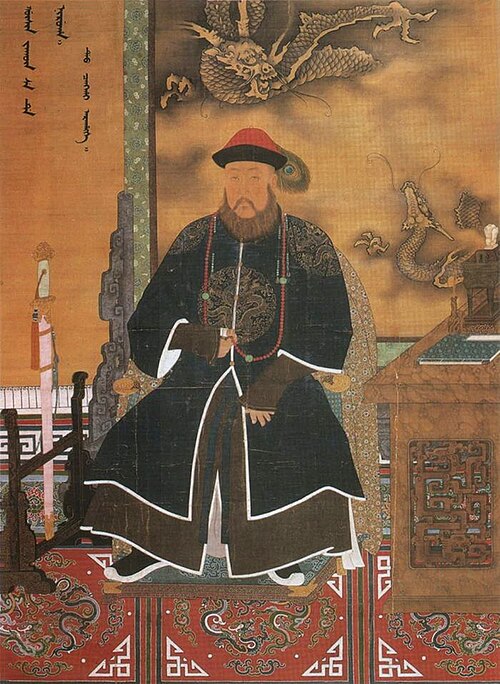
Dorgon (1612–1650)

Qing expansion and conquest of the Ming