Order of the Garter
Videos
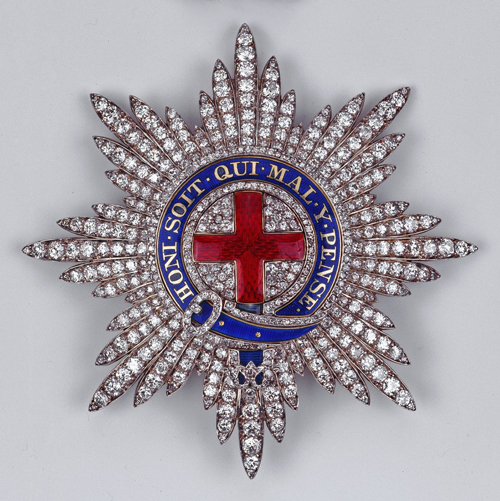
The Most Noble Order of the Garter is an order of chivalry founded by King Edward III in 1348. The most senior order of knighthood in the British honours system, it is outranked in precedence only by
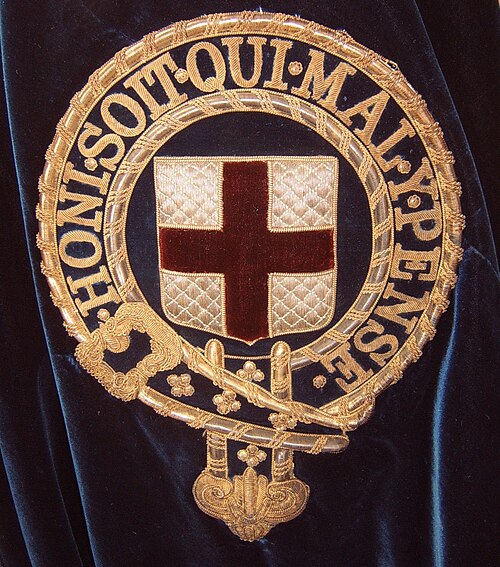
Badge of the Order embroidered onto the left shoulder of a Knight's blue velvet mantle

Henry of Grosmont, Earl (later Duke) of Lancaster (d. 1361), the second appointee of the Order, shown wearing a tabard displaying the royal arms of England over which is his blue mantle or garter robe. Illuminated miniature from the Bruges Garter Book c. 1430 by William Bruges, first Garter King of Arms
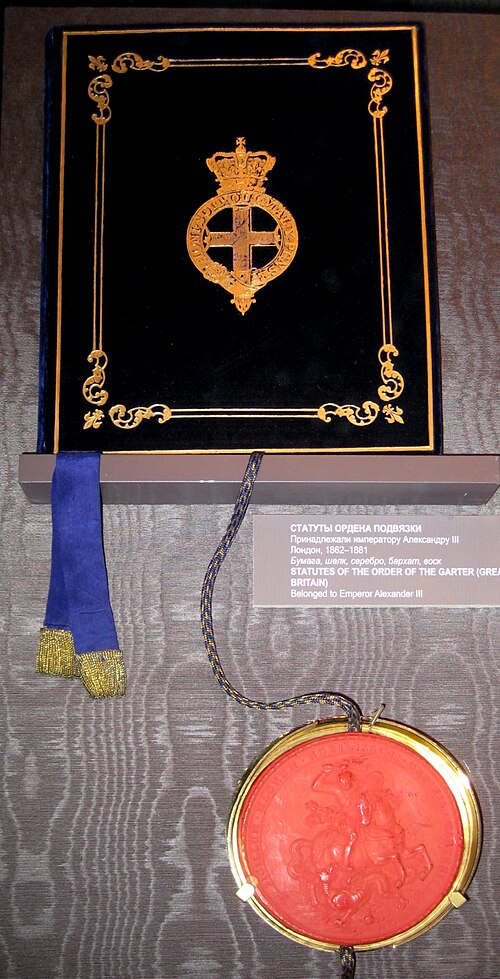
Statutes of the Order of the Garter, this copy having once belonged to Emperor Alexander III of Russia

Knights Companion processing to St George's Chapel, Windsor for the Garter Service
Order of the Thistle
Videos
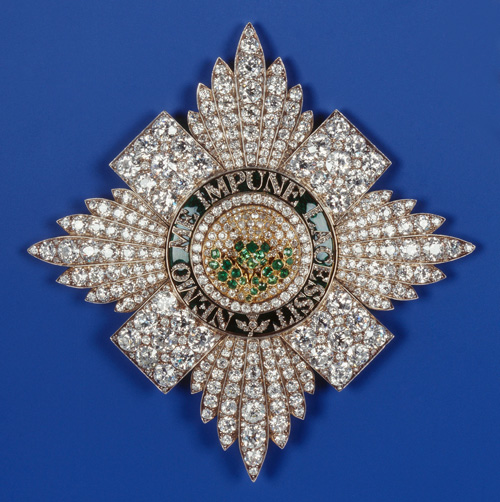
The Most Ancient and Most Noble Order of the Thistle is an order of chivalry associated with Scotland. The current version of the order was founded in 1687 by King James VII of Scotland, who asserted
Order of the Garter
…Clement Attlee and Opposition Leader Winston Churchill, membership of Great Britain's highest ranking orders of chivalry (the Order of the Garter, the Order of the Thistle and the dormant Order of St Patrick) became a personal gift of the Sovereign once again. Thus, the sovereign personally selects Knights and Ladies…
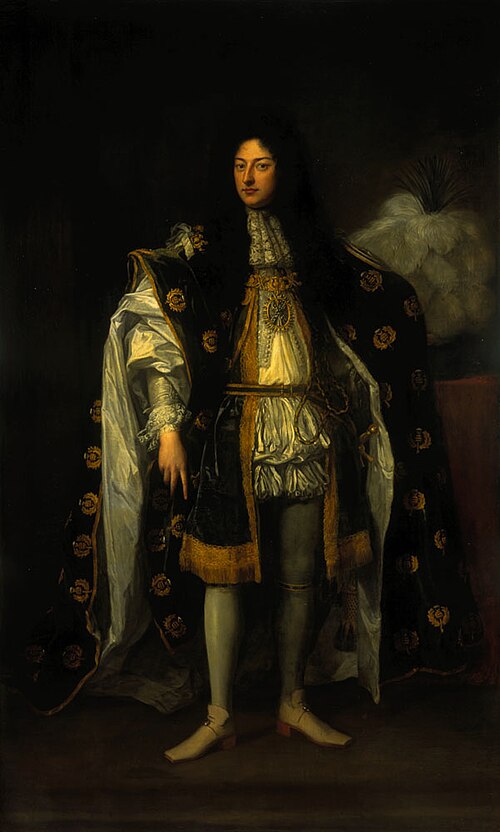
John Drummond, 1st Earl of Melfort in 1688; originator of the 'revived' order

James V wearing a Thistle-style collar, c. 1538

Prince Augustus Frederick, Duke of Sussex in the robes of a Knight of the Order of the Thistle

Vestments of a Knight of the Thistle