Orientalism (book)
Videos
Orientalism is a 1978 book by Edward Said, in which he establishes the term "Orientalism" as a critical concept to describe the Western world's commonly contemptuous depiction and portrayal of the Eas
Cover of the first edition, showing part of The Snake Charmer (1880), an Orientalist painting by Jean-Léon Gérôme (1824–1904) currently held at the Clark Art Institute

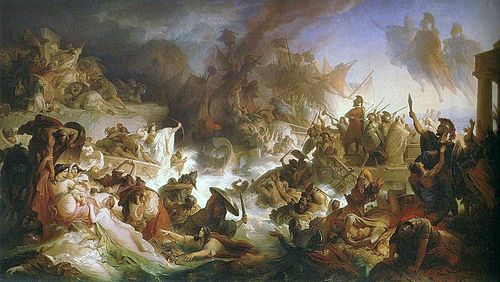
The Sea Battle at Salamis (1868) envisages the Greco-Persian Wars as an East–West clash of civilisations.

The Reception of the Ambassadors in Damascus (1511) depicts the "Arabic culture" of 16th-century Syria as part of a "romanticized" Orient.

The Eastern world depicted in The Snake Charmer (1880), by Jean-Léon Gérôme, illustrates the sensuous beauty and cultural mystery of the fiction that is "the exotic Orient".
The Snake Charmer
Videos
The Snake Charmer is an oil-on-canvas painting by French artist Jean-Léon Gérôme produced around 1879. After it was used on the cover of Edward Said's book Orientalism in 1978, the work "attained a le
Orientalism (book)
…of Orientalism (1978) did not include the genre of Orientalist painting or any other visual arts, despite the book-cover featuring a detail-image of The Snake Charmer (1880), a popular, 19th-century Orientalist painting—to which the writer Linda Nochlin applied Said's method of critical analysis "with uneven results…

Another painting by Gérôme entitled The Snake Charmer, date unknown, New Orleans Museum of Art.

Jean-Léon Gérôme and Aimé Morot, study for The Snake Charmer, by 1877, private collection.

Jean Léon Gérôme self portrait c 1884 Eskenazi Museum Bloomington