Ouroboros
Videos
The ouroboros or uroboros is an ancient symbol depicting a snake or dragon eating its own tail. The ouroboros entered Western tradition via ancient Egyptian iconography and the Greek magical tradition
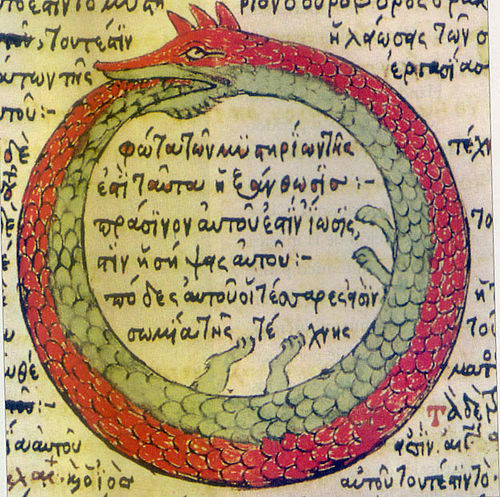
A dragon-like ouroboros in a 1478 drawing in an alchemical tract

First known representation of the ouroboros, on one of the shrines enclosing the sarcophagus of Tutankhamun

A highly stylised ouroboros from The Book of Kells, an illuminated Gospel Book (c. 800 CE)

Engraving of a wyvern-type ouroboros by Lucas Jennis, in the 1625 alchemical tract De Lapide Philosophico. The figure serves as a symbol for mercury.
Theosophical Society
Videos
The Theosophical Society is the organizational body of Theosophy, an esoteric new religious movement. It was founded in New York City, United States in 1875. Among its founders were Helena Blavatsky,
Ouroboros
…Transylvanian Thaler of Gabriel Bethlen showing his portrait and coat of arms including an ouroboros in the centre of the shield (1621) Seal of the Theosophical Society, founded 1875 Flag of the short-lived Italian Regency of Carnaro at Fiume, bearing the snake Ouroborus World serpent in mythology In Norse mythology…

Notes of the meeting proposing the formation of the Theosophical Society, New York City, September 8, 1875
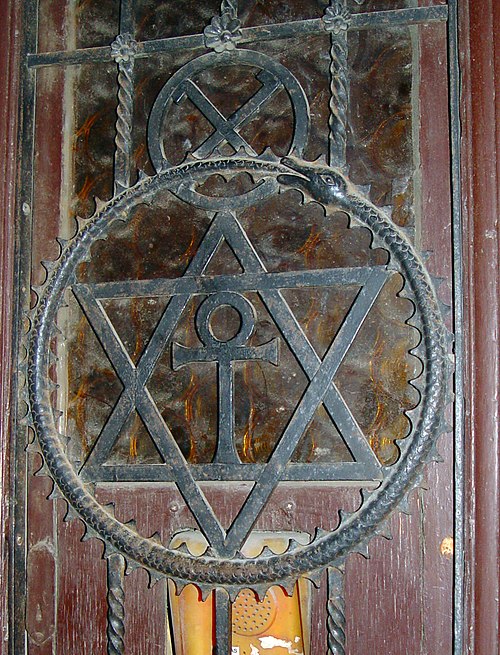
Seal of the Theosophical Society, Budapest, Hungary

Main building of the Theosophical Society in Adyar, India, 1890

Theosophical Society, Basavanagudi, Bangalore, India