PGM-19 Jupiter
Videos
The PGM-19 Jupiter was the first nuclear armed, medium-range ballistic missile of the United States Air Force. It was a liquid-propellant rocket using RP-1 fuel and LOX oxidizer, with a single Rocketd
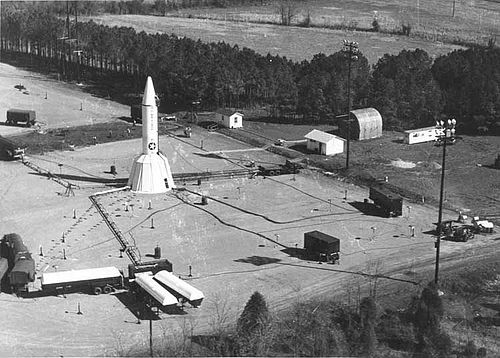
Jupiter missile emplacement showing ground support equipment. The bottom third of the missile is encased in a "flower petal shelter" of wedge-shaped metal panels allowing crews to service the missile in all weather conditions.

Admiral Arleigh Burke is credited with breaking the Navy out of its moribund ways, and pressing for development of the SLBM.

The Navy's Polaris had range similar to Jupiter.

Secretary of Defence Neil McElroy visits the Jupiter prototype assembly line at ABMA. ABMA built the test articles, while Chrysler built the production models.
Cuban Missile Crisis
Videos
The Cuban Missile Crisis, also known as the October Crisis in Cuba, or the Caribbean Crisis, was a 13-day confrontation between the governments of the United States and the Soviet Union, when American
PGM-19 Jupiter
…vulnerable to Soviet attacks. All Jupiter MRBMs were removed from service by April 1963, as a backdoor trade with the Soviets in exchange for their earlier removal of MRBMs from Cuba. Redstone Arsenal, Huntsville, Alabama…

PGM 19A Jupiter missile 02

Missile Parade Moscow 1964

Adlai Stevenson shows missiles to UN Security Council with David Parker standing

Cubacrisis 17 Oct 1962