Pabilsaĝ
Videos
Pabilsaĝ was a Mesopotamian god. Not much is known about his role in Mesopotamian religion, though it is known that he could be regarded as a bow-armed warrior deity, as a divine cadastral officer or
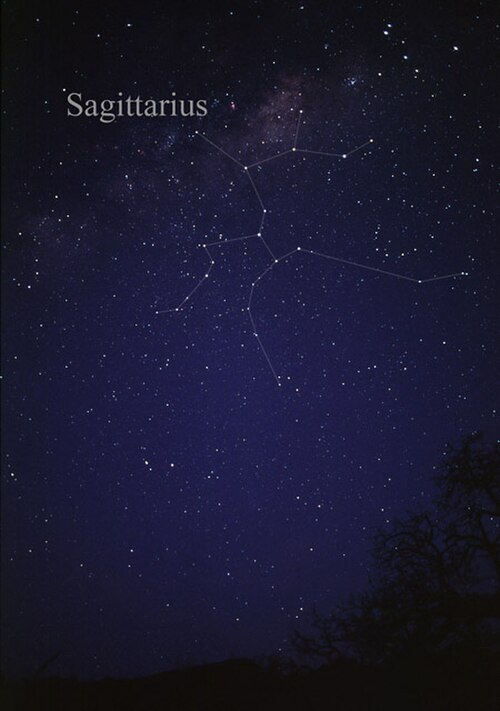
The constellation Sagittarius, identified with Pabilsaĝ in Mesopotamian astronomy.
Ninurta
Videos
Ninurta, also known as Ninĝirsu, is an ancient Mesopotamian god associated with farming, healing, hunting, law, scribes, and war who was first worshipped in early Sumer. In his earliest depictions, he
Pabilsaĝ
…alongside other medicine goddesses, such as Gula or Ninkarrak, though not necessarily in the role of a spouse. He was also closely associated with Ninurta, and possibly through syncretism with him came to be viewed as a son of Enlil. Larak, a lost city possibly located near Isin, was the main cult center…

Gudea dedication tablet to God Ningirsu: "For Ningirsu, Enlil's mighty warrior, his Master; Gudea, ensi of Lagash"

The Gudea cylinders, dating to c. 2125 BC, describe how King Gudea of Lagash rebuilt the temple of Ninĝirsu in Lagash as the result of a dream in which he was instructed to do so

1853 restoration of what the city of Kalhu, Ninurta's main cult center in the Assyrian Empire, might have originally looked like, based on the excavations of the British archaeologist Austen Henry Layard there in the 1840s

Male figure in an Assyrian winged sun emblem from the Northwest Palace at Kalhu; some authors have speculated that this figure may be Ninurta, but most scholars reject this assertion as unfounded