Palmyra
Videos
Palmyra is an ancient city in central Syria. It is located in the eastern part of the Levant, and archaeological finds date back to the Neolithic period, and documents first mention the city in the ea
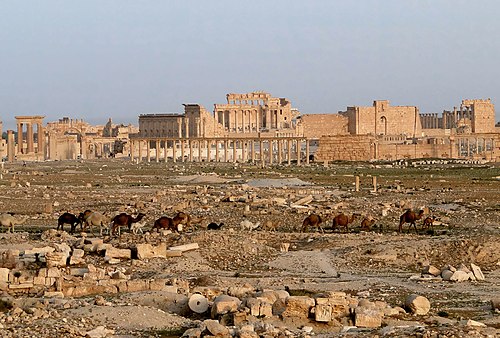
The ruins of Palmyra in 2010

The northern Palmyrene mountain belt

Alphabetic inscription in Palmyrene alphabet

Palmyrene funerary portrait representing Aqmat, a Palmyrene aristocrat
Khaled al-Asaad
Videos
Khaled Mohamad al-Asaad was a Syrian archaeologist who was head of antiquities in the ancient city of Palmyra, a UNESCO World Heritage Site. He held this position for over forty years. Al-Asaad was pu
Palmyra
…were released by ISIL showing the killing of Syrian prisoners in front of crowds at the theatre. On 18 August, Palmyra's retired antiquities chief Khaled al-Asaad was beheaded by ISIL after being tortured for a month to extract information about the city and its treasures; al-Asaad refused to give any information…

Al-Asaad in 2002

Memorial for Khaled al-Asaad in Italy