A panel painting is a painting made on a flat panel of wood, either a single piece or a number of pieces joined together. Until canvas became the more popular support medium in the 16th century, panel painting was the normal method, when not painting directly onto a wall (fresco) or on vellum. Wood panels were also used for mounting vellum paintings.
The Ghent Altarpiece by Jan van Eyck and his brothers, 1432. A large altarpiece on panel. The outer wings are hinged, and painted on both sides.
Fayum mummy portrait of boy in 2nd-century Greco-Roman Egypt. Encaustic on wood—note the cracks.
The Frankfurt Paradiesgärtlein, a German panel painting from c. 1410
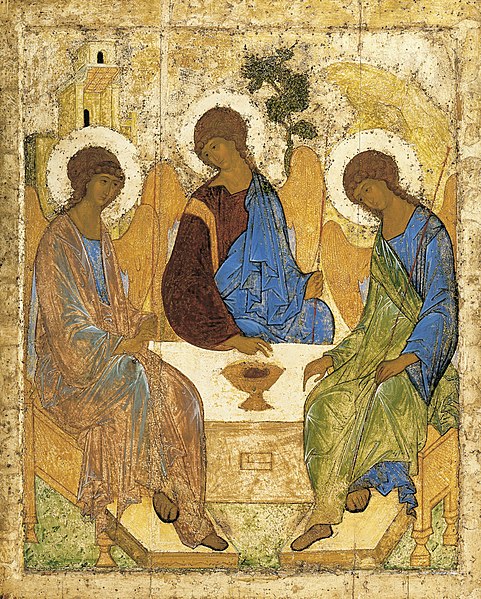
Russian icon by Andrei Rublev, early 15th century, on a three-piece panel. The raised edges are probably gesso rather than wood.
Canvas is an extremely durable plain-woven fabric used for making sails, tents, marquees, backpacks, shelters, as a support for oil painting and for other items for which sturdiness is required, as well as in such fashion objects as handbags, electronic device cases, and shoes. It is popularly used by artists as a painting surface, typically stretched across a wooden frame.
Sailor bag made of canvas
Canvas roof at the Erasmus station of the Brussels Metro
One of Poland's biggest canvas paintings, the Battle of Grunwald, 1878, by Jan Matejko (426 cm × 987 cm (168 in × 389 in)), displayed in the National Museum in Warsaw
Canvas on stretcher bar