Panthoibi
Videos
Panthoibi, also known as Nongpok Leima, is a goddess associated with civilization, courage, fertility, handicraft, love, victory, warfare and wisdom in the mythology and religion of Ancient Kangleipak

Panthoibi riding her white horse, as described in the Panthoibi Khonggul.

Melastoma malabathricum

Statue of Panthoibi during Panthoibi Iratpa festival celebrated at Hojai Natun Bazar, Assam

The tableau of Manipur passes through the Raj path during the 61st Republic Day Parade 2010, in New Delhi on January 26, 2010
Durga
Videos
Durga is one of the most important deities in Hinduism. She is widely worshipped by the followers of the goddess-centric sect, Shaktism, regarded as the principal aspect of Mahadevi, the Ultimate Real
Panthoibi
…1709-1748) pulled down her temples and broke her statues, and from the 18th century onwards, Panthoibi was treated as a manifestation of the Hindu goddess Durga or as her incarnation or as her manifestation. The identity of Panthoibi was changed to that of Hindu goddess Durga. She was worshipped for five days…

A painting of Durga at Jaganmohan Palace, Mysuru
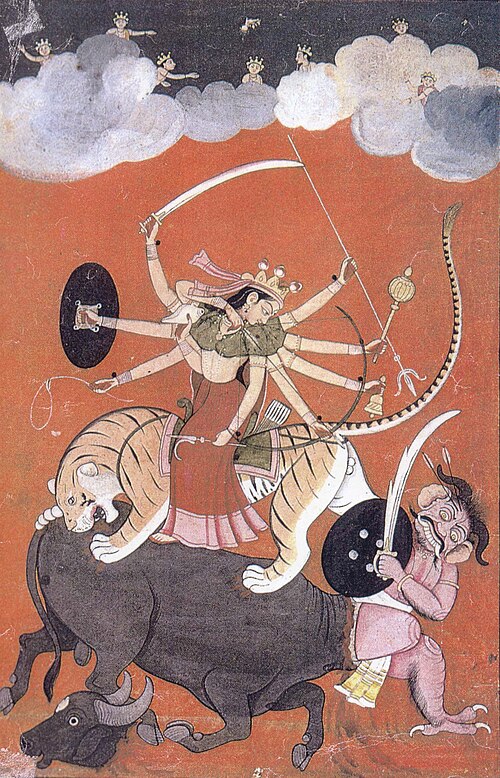
18th-century painting of Durga slaying the buffalo demon Mahishasura

Durga killing Mahishasura in a Durga Puja celebration in Bengal

13th century stone sculpture in the British Museum