Paper clip
Videos
A paper clip is a tool used to hold sheets of paper together, usually made of steel wire bent to a looped shape. Most paper clips are variations of the Gem type introduced in the 1890s or earlier, cha

Paper clips colors coated in a mix of plastic and rubber

A paper clip holder

Small metal paper clip, with measure in centimeters

Assorted paperclip shapes, sizes, and designs
Metal
Videos
A metal is a material that, when polished or fractured, shows a lustrous appearance, and conducts electricity and heat relatively well. These properties are all associated with having electrons availa
Paper clip
…oblong shape with straight sides, but may also be triangular or circular, or have more elaborate shapes. The most common material is steel or some other metal, but molded plastic is also used. Some kinds of paper clips use a two-piece clamping system. Recent innovations include multi-colored plastic-coated…
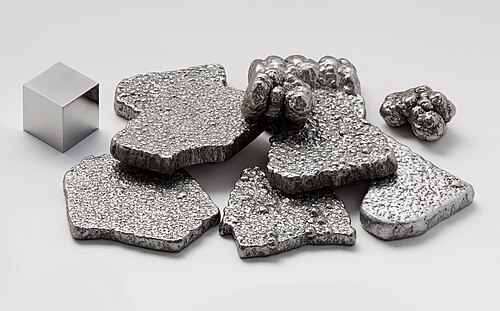
Iron, shown here as fragments and a 1 cm3 cube, is an example of a chemical element that is a metal.

Metal in the form of a gravy boat made from stainless steel, an alloy largely composed of iron, chromium and nickel

Gallium crystals

Battery demonstration unit for conducting polymers built by nobel laureate Alan MacDiarmid