Parcae
Videos
In ancient Roman religion and myth, the Parcae were the female personifications of destiny who directed the lives of humans and gods. They are often called the Fates in English, and their Greek equiva

Les Parques ("The Parcae," ca. 1885) by Alfred Agache

The Three Parcae (1540-1550), by Marco Bigio, in Villa Barberini, Rome

Fireback with Parcae

The Three Parcae Spinning the Fate of Marie de' Medici (1622-1625) by Peter Paul Rubens
Fates
Videos
The Fates are a common motif in European polytheism, most frequently represented as a trio of goddesses. The Fates shape the destiny of each human, often expressed in textile metaphors such as spinnin
Parcae
…Parcae (singular: Parca) were the female personifications of destiny who directed the lives (and deaths) of humans and gods. They are often called the Fates in English, and their Greek equivalent were the Moirai. They did not control a person's actions except when they are born, when they die, and how much…
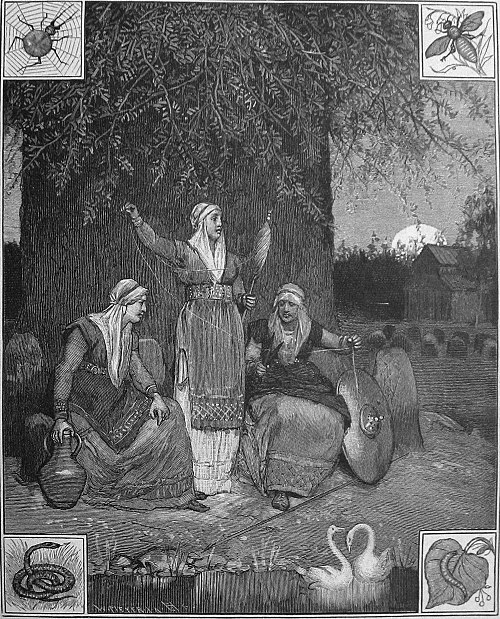
Norns in Norse mythology are one descendant group

The Fates controlling the thread of life with their tools.

Late second-century AD Greek mosaic from the House of Theseus at Paphos Archaeological Park on Cyprus showing the three Moirai: Klotho, Lachesis, and Atropos, standing behind Peleus and Thetis, the parents of Achilles.

A depiction of the Fates, specifically Atropos, exercising her power on a captive man.