Pareidolia
Videos
Pareidolia is the tendency for perception to impose a meaningful interpretation on a nebulous stimulus, usually visual, so that one detects an object, pattern, or meaning where there is none. Pareidol

An example of pareidolia in the Rocks of Dwejra at Gozo, Malta, which looks like a face.

A pyroxene crystal in a piece of basalt that resembles a human face, facing to the left
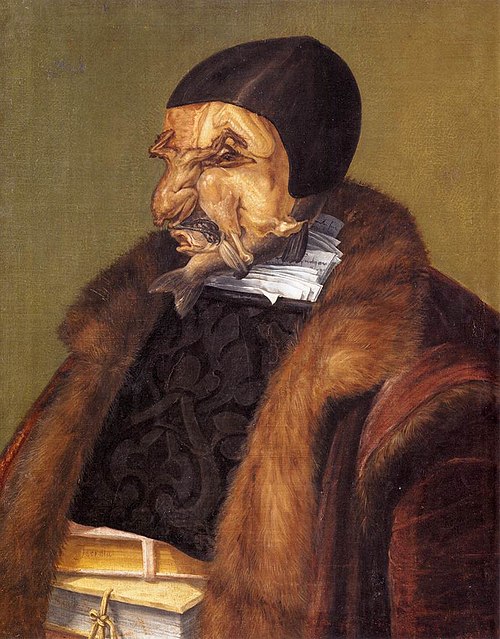
The Jurist by Giuseppe Arcimboldo, 1566. What appears to be his face is a collection of fish and poultry, while his body is a collection of books dressed in a coat.

Salem by Sydney Curnow Vosper (1908), a painting notorious for the belief that the face of the devil was hidden in the main character's shawl
Rhesus macaque
Videos
The rhesus macaque, colloquially rhesus monkey, is a species of Old World monkey in the Macaca genus. There are between six and nine recognised subspecies split between two groups, the Chinese-derived
Pareidolia
…voices (mainly indistinct) or music in random noise, such as that produced by air conditioners or by fans. Face pareidolia has also been demonstrated in rhesus macaques. The word derives from the Greek words pará (παρά, "beside, alongside, instead [of]") and the noun eídōlon (εἴδωλον, "image, form, shape…

Rhesus macaque, male, Gokarna

Female and juvenile rhesus macaque at Galtaji, Jaipur, Rajasthan, India

Rhesus macaque by the Agra Fort, Uttar Pradesh, India

Mother and child rhesus macaque in Nepal