Paris–Roubaix
Videos
Paris–Roubaix is a one-day professional bicycle road race in France, held on the first Sunday in April and starting north of Paris and finishing in Roubaix, at the border with Belgium. It is one of cy
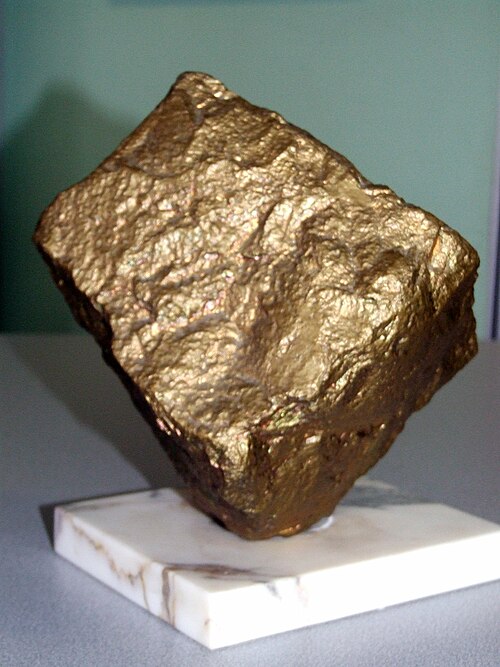
Winners since 1977 have received a mounted cobble (sett); the organisers keep a gold-plated cobble for themselves

Théodore Vienne Roubaix entrepreneur

Share of the Société Anonyme du Vélodrome de Roubaix, issued 3 March 1899

Cobblestone Emblem of Paris–Roubaix, Donated on the 100th anniversary by 'Les Amis de Paris–Roubaix' and 'La Ville de Roubaix' 50°40′43″N 3°12′17″E / 50.678548°N 3.204612°E / 50.678548; 3.204612
Mathieu van der Poel
Videos
Mathieu van der Poel, nicknamed "The Flying Dutchman", is a Belgian-born Dutch professional cyclist who currently rides for the UCI WorldTeam Alpecin–Premier Tech. He competes in cyclo-cross, mountain
Paris–Roubaix
…In 2024, a chicane was added prior to the entrance of the forest to slow the speed of riders and improve safety. Some criticised the decision, with Mathieu van der Poel stating "Is this a joke?". The second of three sectors usually graded as five star difficulty, this 3 km sector includes a 16m rise and 2 right-angled…

Van der Poel in 2025

Van der Poel at the 2013 Krawatencross

Van der Poel (right) in front of Wout Van Aert at the UCI Cyclocross World Cup, Namur, 2015

Van der Poel at the 2018 Cross-country World Cup in Albstadt