Parliament of England
Videos
The Parliament of England was the legislature of the Kingdom of England from the 13th century until 1707 when it was replaced by the Parliament of Great Britain as a result of the Treaty of Union 1707

Westminster 16C

A 16th-century depiction of the Parliament of King Edward I. The lords spiritual are seated to the king's right, the Lords Temporal to his left, and in the centre sit the justices and law officers.

Between 1352 and 1396, the House of Commons met in the chapter house of Westminster Abbey.

Queen Elizabeth I presiding over Parliament, c. 1580 – c. 1600
House of Commons of England
Videos
The House of Commons of England was the lower house of the Parliament of England from its development in the 14th century to the union of England and Scotland in 1707, when it was replaced by the Hous
Parliament of England
…consent to levy taxation. Originally a unicameral body, a bicameral Parliament emerged when its membership was divided into the House of Lords and House of Commons, which included knights of the shire and burgesses. During Henry IV's reign, the role of Parliament expanded beyond the determination of taxation policy…
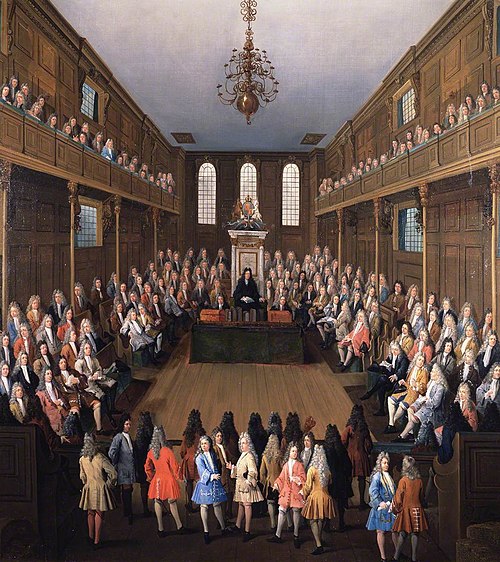
Interior of the House of Commons In Session by Peter Tillemans, c. 1710