Passive cooling
Videos
Passive cooling is a building design approach that focuses on heat gain control and heat dissipation in a building in order to improve the indoor thermal comfort with low or no energy consumption. Thi

A courtyard in Florence, Italy. It is tall and narrow, with a fountain spouting very thin streams of water at the bottom, and upper rooms opening onto it. Night flushing of the courtyard happens automatically as the night air cools; evaporative cooling cools it further and can be used to create drafts and change the air during the day. Windows can be left open around the clock.
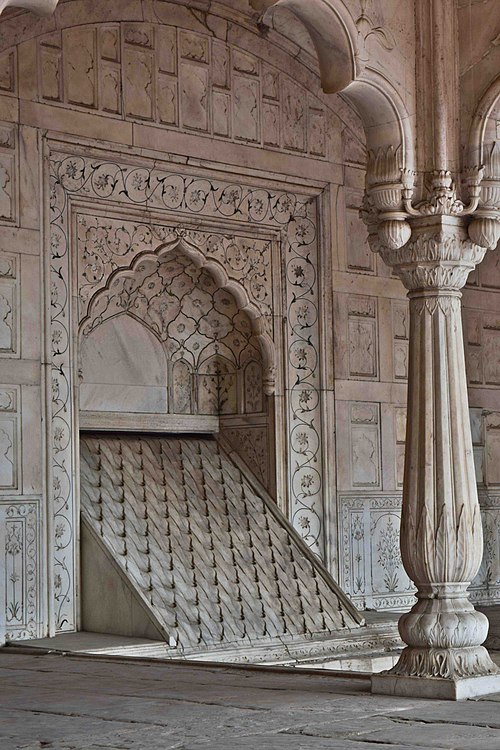
A salasabil (currently dry) in the Red Fort in Delhi, India. A salasabil is designed to maximize evaporative cooling; the cooling, in turn, may be used to drive air circulation.
Air conditioning
Videos
Air conditioning, often abbreviated as A/C or air con, is the process of removing heat from an enclosed space to achieve a more comfortable interior temperature and, in some cases, controlling the hum
Passive cooling
…the earth/soil. Passive cooling is an important tool for design of buildings for climate change adaptation – reducing dependency on energy-intensive air conditioning in warming environments. Passive cooling covers all natural processes and techniques of heat dissipation and modulation without the use of energy. Some…

An array of air conditioner condenser units outside a commercial office building

The István Röck factory exhibits a small home refrigerator, an air cooling device for large rooms, and a large industrial refrigerator (in the background) at the 1896 National Millennium Exhibition in Budapest

Willis Carrier, who is credited with building the first modern electrical air conditioning unit

The infrared transmitting LED on the remote