Patent model
Videos
Photos
A patent model was a handmade miniature model no larger than 12" by 12" by 12" that showed how an invention works. It was one of the most interesting early features of the United States patent system.

Cases of patent models on view at the U.S. Patent Office in 1861

Depiction of the 1877 fire at the U.S. Patent Office, which destroyed 75,000 patent models
Invention
Videos
Photos
An invention is a unique or novel device, method, composition, idea or process. An invention may be an improvement upon a machine, product, or process for increasing efficiency or lowering cost. It may also be an entirely new concept. If an idea is unique enough either as a stand-alone invention or as a significant improvement over the work of others, it can be patented. A patent, if granted, gives the inventor a proprietary interest in the patent over a specific period of time, which can be licensed for financial gain.

'BUILD YOUR OWN TELEVISION RECEIVER.' Science and Invention magazine cover, November 1928

Alessandro Volta with the first electrical battery. Volta is recognized as an influential inventor.
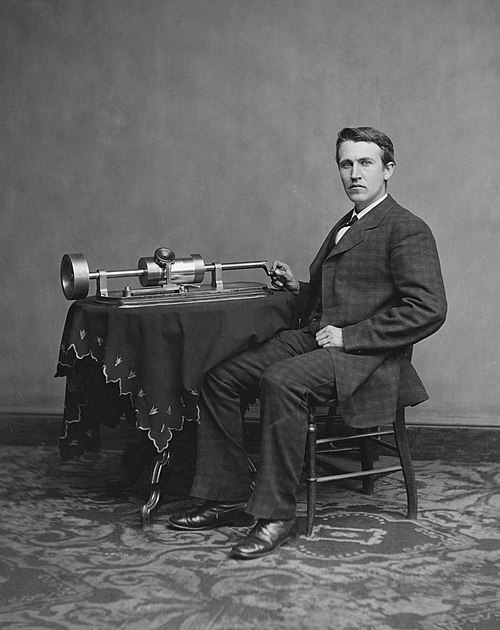
Thomas Edison with phonograph. Edison was one of the most prolific inventors in history, holding 1,093 U.S. patents in his name.

The Gutenberg press was voted the most important invention of the second millennium.