Patriarch of Venice
Videos
The Patriarch of Venice is the ordinary of the Patriarchate of Venice. The bishop is one of only four patriarchs in the Latin Rite of the Catholic Church. The other three are the Patriarch of Lisbon,

Francesco Moraglia, the current Patriarch of Venice

Saint Mark's Basilica, the Cathedral of the Patriarch of Venice.

Saint Peter's Chair, the oldest throne of the diocese of Venice in the co-cathedral of Saint Peter of Castello. It is likely an ancient Muslim gravestone transported from Antioch by merchants.
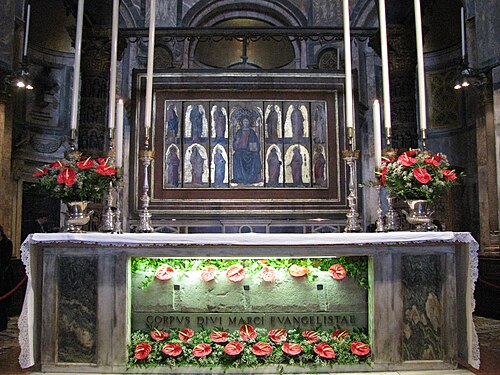
Saint Mark's Basilica, the main altar: it retains inside the body of the Apostle St. Mark the Evangelist.
Francesco Moraglia
Videos
Francesco Moraglia is an Italian prelate of the Catholic Church. He has been Patriarch of Venice since March 2012; he is the first native of Genoa to hold that position. He was bishop of La Spezia-Sar
Patriarch of Venice
…Patriarch of Venice is created a cardinal at the consistory following his appointment, though nothing requires the pope to do so. The current patriarch Francesco Moraglia has not been made a cardinal. In the last centuries of the Republic of Venice (to 1797), exceptionally among Catholic bishops, the patriarch was elected…

Francesco Moraglia, bishop of La Spezia-Sarzana-Brugnato, at a meeting

On the day of entry into the patriarchate (25 March 2012)

Meeting with engaged couples and young spouses