In post-Roman Europe, patricians constituted a hereditary class of elite families who monopolized political authority and economic dominance in autonomous urban centers, particularly in the Italian ci
The Nobel Prize-winning author Thomas Mann belonged to a Hanseatic patrician family (the Mann family) and portrayed the patriciate in his 1901 novel Buddenbrooks.

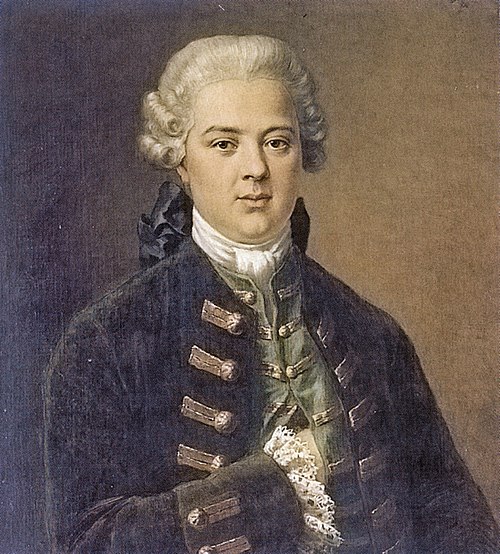
The German banker Johann Hinrich Gossler married Hamburg patrician heiress Elisabeth Berenberg, and became owner of Berenberg Bank. His descendants reached the highest positions in the "aristocratic republic", including as senators and head of state.

The Swiss patrician Franz Rudolf Frisching in the uniform of an officer of the Bernese Huntsmen Corps with his Berner Laufhund, painted by Jean Preudhomme in 1785

Francesco Loredan (1665–1715), Venetian nobleman and magnate, head of the Santo Stefano branch of the House of Loredan
Patrician (ancient Rome)
Videos
The patricians were originally a group of ruling class families in ancient Rome. The distinction was highly significant in the Roman Kingdom and the early Republic, but its relevance waned after the C
Patrician (post-Roman Europe)
…decline of feudal structures and rise of commerce. Patricianship began in the ancient world, where cities such as Ancient Rome had a social class of patrician families, whose members were initially the only people allowed to exercise many political functions. In the rise of European towns in the 12th and 13th…
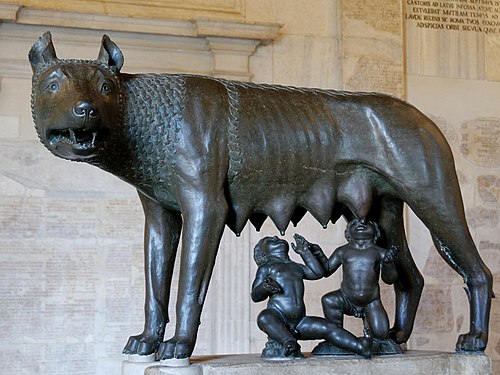
Romulus and his brother, Remus, with the she-wolf. Romulus is credited with creating the patrician class.