Patte d'oie
Videos
The French term patte d'oie describes a design whereby three, four, or five or more straight roads or paths radiate out from a central point, so called from its resemblance to a goose's foot.

Aerial view of the famous patte d'oie at the entrance to the Château de Versailles

Site plan for the Château de Richelieu (c. 1639), drawing by Jacques Lemercier

Site plan for the Château de Vaux-le-Vicomte (c. 1660), designed by André Le Nôtre, engraved by Israel Silvestre

Site plan for the Château de Versailles (c. 1664–1665), designed by Le Nôtre
Jacques Lemercier
Videos
Jacques Lemercier was a French architect and engineer, one of the influential trio that included Louis Le Vau and François Mansart who formed the classicizing French Baroque manner, drawing from Frenc
Jacques Lemercier in 1644 by Philippe de Champaigne with the Sorbonne Chapel in the background


Lemercier's Pavillon de l’Horloge at the Louvre

Relief of ship anchors and prows, a surviving remnant of Lemercier's Palais-Cardinal
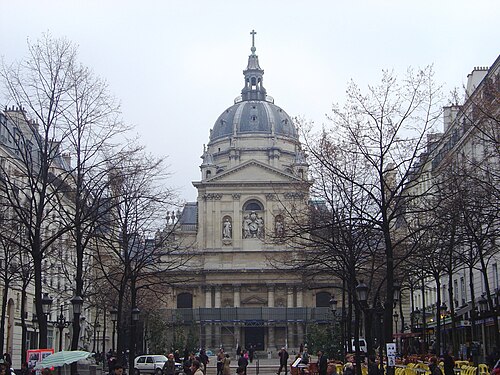
The chapel at the Sorbonne, 1635: prototype for Mansart's at Les Invalides.