Peasant Revolt (Albania)
Videos
The Peasant Revolt, also known as the Muslim uprising, was an uprising of peasants from central Albania, mostly Muslims against the regime of Wilhelm, Prince of Albania during 1914. It was one of the reasons for the prince's withdrawal from the country which marked the fall of the Principality of Albania. The uprising was led by Muslim leaders Haxhi Qamili, Arif Hiqmeti, Musa Qazimi and Mustafa Ndroqi. Along with a demand of total amnesty, the rebels required the return of Albania to the suzerainty of the Sultan of the Ottoman Empire.

Hendrik Reimers, Dutch captain of the International Gendarmerie, captured by rebels (June 1914)
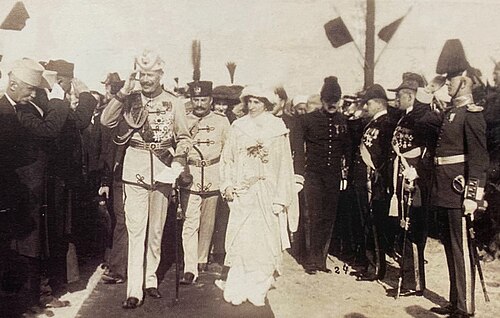
Prince William and his wife Sophie arriving in Albania on March 7, 1914

Ahmed Izzet Pasha

Wilhelm, Prince of Albania, Isa Boletini and officers of the International Gendarmerie: Duncan Heaton-Armstrong and Colonel Thomson near Durres in June 1914
The Autonomous Republic of Northern Epirus was a short-lived, self-governing entity founded in the aftermath of the Balkan Wars on 28 February 1914, by the local Greek population in southern Albania.


Picture of the official declaration of Independence on 1 March 1914. President Georgios Christakis and members of the Government, bishops Vasileios and Spyridon as well as local clergy, military personnel and civilians are seen in the front.

The Northern Epirote flag as depicted by the French magazine L'Illustration (April 1914) in the Sarandë headquarters. Sarandë was one of the first cities that joined the autonomists' movement.

Armed group of Epirote women. August 1914, Gjirokastër region.