A pencil detonator or time pencil is a time fuze designed to be connected to a detonator or short length of safety fuse. They are about the same size and shape as a pencil, hence the name. They were introduced during World War II and developed at Aston House, Hertfordshire, UK.
An array of World War 2 pencil detonators displayed at the Museum of the British Resistance Organisation at the Parham Airfield Museum, 2007
Image: Pencil detonators 997.485 IMG 7532 gradient
Image: Pencils detonators 997.517 IMG 7556 gradient
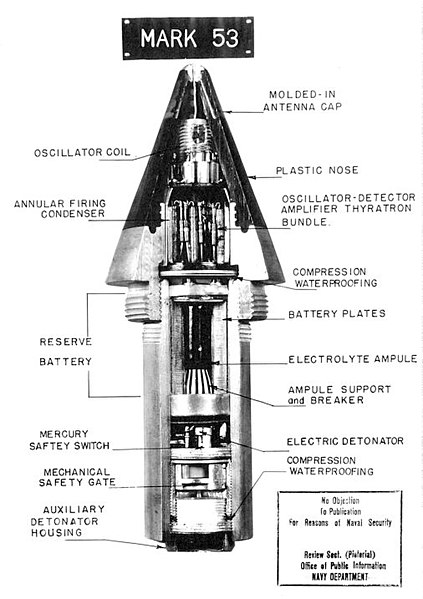
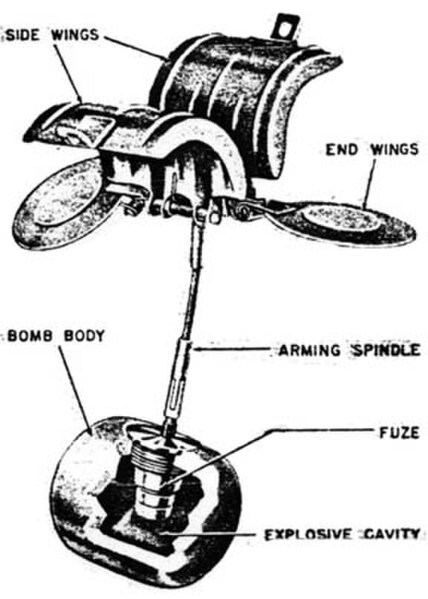
In military munitions, a fuze is the part of the device that initiates its function. In some applications, such as torpedoes, a fuze may be identified by function as the exploder. The relative complexity of even the earliest fuze designs can be seen in cutaway diagrams.
Mk 53 Proximity fuze for an artillery shell, c. 1945
SD2 Butterfly bomb c. 1940 - wings rotate as bomb falls, unscrewing the arming spindle connected to the fuze
Avro Lancaster at RAF Metheringham. Note the "Fuzed" status, chalked on the nose of each bomb
Cross-sectional views of QF 2-pounder naval gun shells, showing percussion fuzes.