Pentimento
Videos
In painting, a pentimento is "the presence or emergence of earlier images, forms, or strokes that have been changed and painted over". Sometimes the English form "pentiment" is used, especially in old
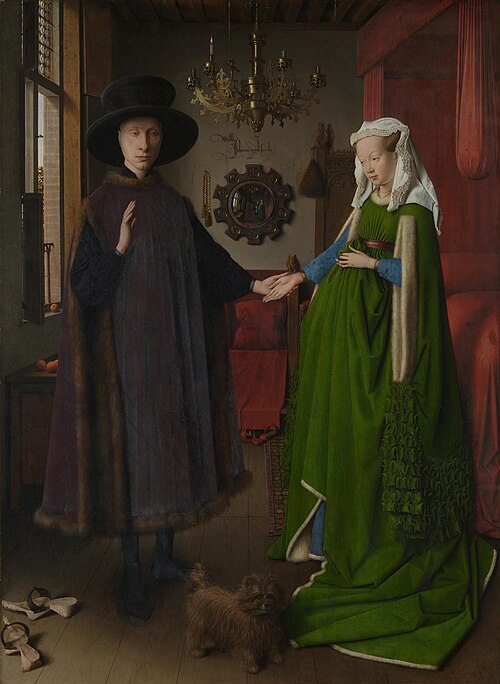
The Arnolfini Portrait by Jan van Eyck (1434). Among other changes made, the husband's face was higher by about the height of his eye, the wife's was higher, and her eyes looked more to the front. Each of the husband's feet was underdrawn in one position, painted in another, and then overpainted in a third. These alterations can be seen in infra-red reflectograms.

The face of the woman in the image The Old Guitarist is painted over. These marks would not usually be described as pentimenti as the subjects are totally different

Jacques de Norvins by Ingres

Caravaggio's The Cardsharps
The Old Guitarist
Videos
The Old Guitarist is an oil painting by Pablo Picasso, which he created in late 1903 and early 1904. It depicts an elderly musician, a haggard man with threadbare clothing, who is hunched over his gui
Pentimento
…The number of pentimenti found in the work of such masters naturally tends to be higher. Marks revealing a totally different subject, for example in The Old Guitarist by Picasso, are not usually described as pentimenti – the artist has abandoned his "earlier composition" to begin a new one. In cases where a composition…

Old guitarist chicago