Percy Bysshe Shelley
Videos
Percy Bysshe Shelley was an English writer who is considered one of the major English Romantic poets. A radical in his poetry as well as in his political and social views, Shelley did not achieve fame
Shelley in 1819


William Godwin in 1802, by James Northcote

Posthumous Portrait of Shelley Writing Prometheus Unbound in Italy – painting by Joseph Severn, 1845

The Funeral of Shelley by Louis Édouard Fournier (1889). Pictured in the centre are, from left, Trelawny, Hunt, and Byron. In fact, Hunt did not observe the cremation, and Byron left early. Mary Shelley, who is pictured kneeling at left, did not attend the funeral.
Mary Shelley
Videos
Mary Wollstonecraft Shelley was an English novelist who wrote the Gothic novel Frankenstein; or, The Modern Prometheus, which is considered an early example of science fiction. She also edited and pro
Percy Bysshe Shelley
…and over the next four years produced what Zachary Leader and Michael O'Neill call "some of the finest poetry of the Romantic period". His second wife, Mary Shelley, was the author of Frankenstein. He died in a boating accident in 1822 at age 29. Shelley was born on 4 August 1792 at Field Place, Warnham, Sussex…
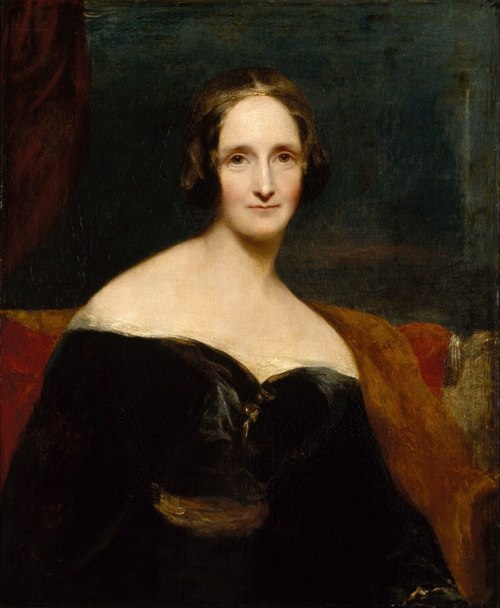
Richard Rothwell's portrait of Shelley was shown at the Royal Academy in 1840, accompanied by lines from Percy Shelley's poem The Revolt of Islam calling her a "child of love and light".

Page from William Godwin's journal recording "Birth of Mary, 20 minutes after 11 at night" (left column, fourth row)

The Polygon (at left) in Somers Town, London, between Camden Town and St Pancras, where Mary Godwin was born and spent her earliest years
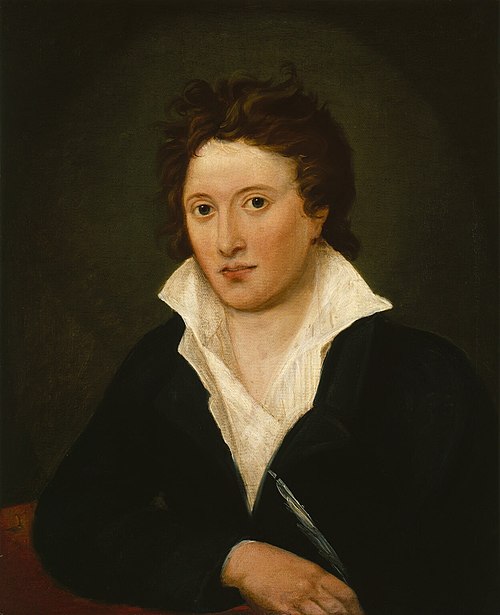
Percy Bysshe Shelley was inspired by the radicalism of Godwin's Political Justice (1793). When the poet Robert Southey met Shelley, he felt as if he were seeing himself from the 1790s. (Portrait by Amelia Curran, 1819.)