Perestroika
Videos
Perestroika was a political reform movement within the Communist Party of the Soviet Union during the late 1980s, widely associated with CPSU general secretary Mikhail Gorbachev and his glasnost polic

5 kopeck perestroika commemorative postage stamp, 1988

"Wall of Sorrow" at the first exhibition of the victims of Stalinism in Moscow, 19 November 1988

A young boy and Ronald Reagan in Red Square, Moscow, 1988
The Soviet Union was formally dissolved and ceased to exist as a sovereign state and subject of international law on December 26, 1991. It also brought an end to the Soviet Union's federal government
Perestroika
…power. The era of perestroika lasted from 1985 until 1991, and is often argued to be a significant cause of the collapse of the Eastern Bloc and the dissolution of the Soviet Union. Russian-British sociologist Mikhail Anipkin views perestroika as a revolution of quadragenarians. In his 2024 book, Party Worker: The Rise of a Soviet…
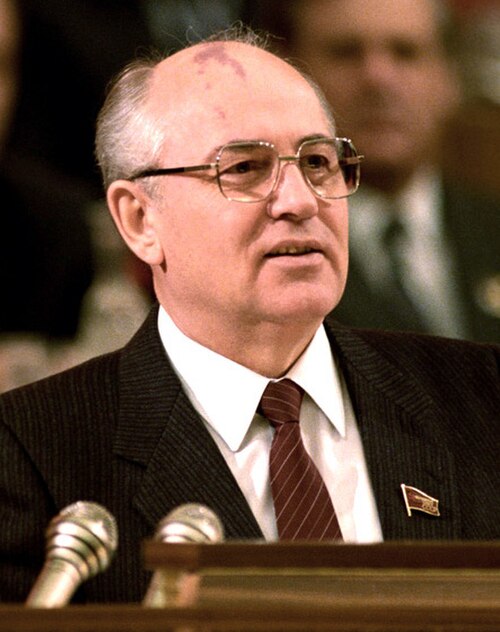
Mikhail Gorbachev in 1987

Anti-Soviet rally of about 250,000 in Lithuania, whose Sąjūdis movement helped restore independence (August 1988)

Environmental concerns over the Metsamor Nuclear Power Plant drove initial demonstrations in Yerevan.

Andrei Sakharov, formerly exiled to Gorky, was elected to the Congress of People's Deputies in March 1989.