Perfume
Videos
Perfume is a mixture of fragrant essential oils or aroma compounds, fixatives and solvents, usually in liquid form, used to give the human body, animals, food, objects, and living-spaces an agreeable

Egyptian scene depicting the preparation of lily perfume, 4th century BC

A Byzantine alembic used to distill perfumes

Ancient Egyptian perfume vessel in shape of a monkey; 1550–1295 BC; faience; height: 6.5 cm, width: 3.3 cm, depth: 3.8 cm; Metropolitan Museum of Art (New York City)
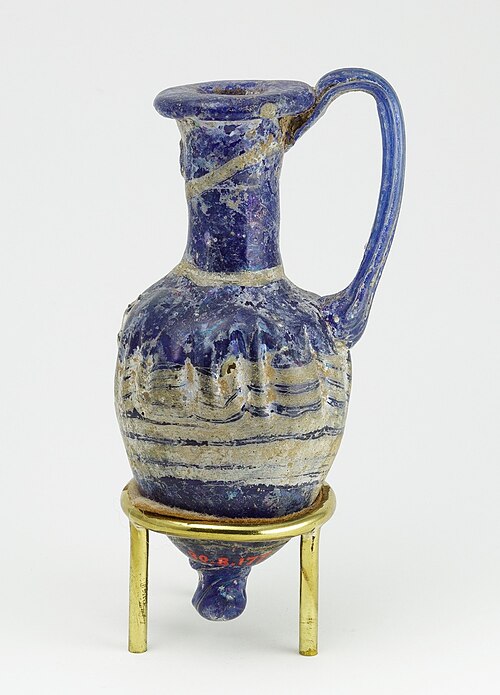
Ancient Egyptian perfume vase in shape of an amphoriskos; 664–630 BC; glass: 8 cm × 4 cm (3.1 in × 1.6 in); Metropolitan Museum of Art (New York City)
Eau de toilette
Videos
Eau de toilette is a lightly scented perfume. It is also referred to as aromatic waters and has a high alcohol content. It is usually applied directly to the skin after bathing or shaving. It is tradi
Perfume
…eau de perfume" or "millésime." Parfum de toilette is a less common term, most popular in the 1980s, that is generally analogous to eau de parfum. Eau de toilette (EdT): 5–15% aromatic compounds (typically ~10%). This is the staple for most masculine perfumes. Eau de cologne (EdC): 2–3% aromatic compounds. This…

Bottles of eau de toilette

Perfume formulas 1910