Perpetual count
Videos
A perpetual count was a head or an ispán of a county in the Kingdom of Hungary whose office was either hereditary or attached to the dignity of a prelate or of a great officer of the realm. The earliest examples of a perpetual ispánate are from the 12th century, but the institution flourished between the 15th and 18th centuries. Although all administrative functions of the office were abolished in 1870, the title itself was preserved until the general abolition of noble titles in Hungary in 1946.


Pálffy Palace, Pressburg/Pozsony (now Bratislava, Slovakia)
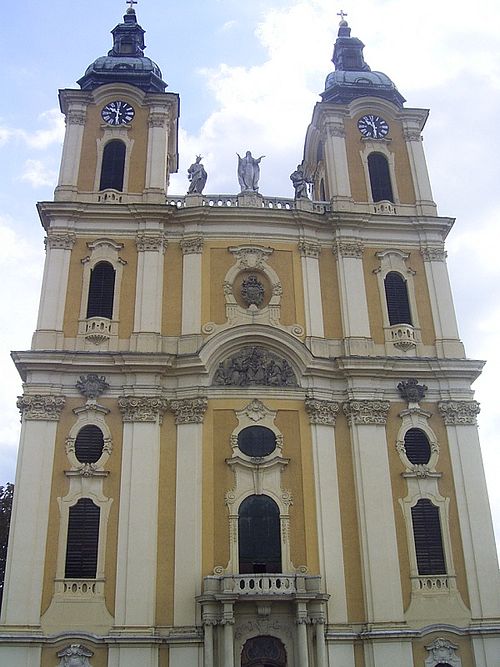
The Archdiocese of Kalocsa–Kecskemét is a Latin Church archdiocese of the Catholic Church in Hungary. The diocese is the metropolitan of the Diocese of Pécs and the Diocese of Szeged–Csanád. Its patron saint is Saint Paul. The current archbishop is Balázs Bábel, who was appointed in 1999.