Petite bourgeoisie
Videos
Petite bourgeoisie in Marxist theory is a social class composed of small business owners, shopkeepers, small-scale merchants, semi-autonomous peasants, and artisans. They are named as such because the
Søren Kierkegaard

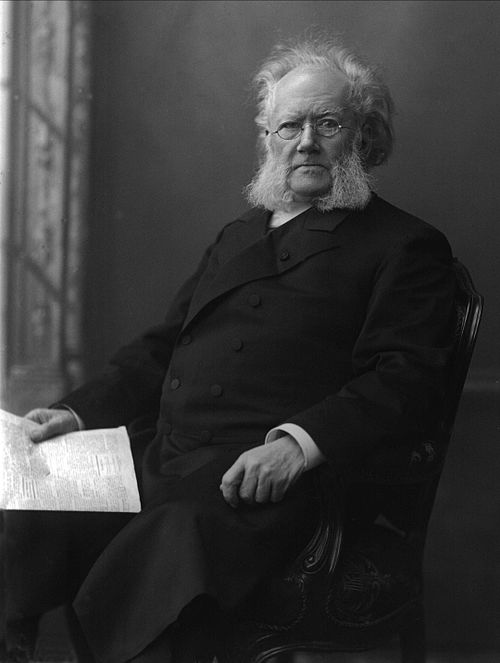
Henrik Ibsen
Middle class
Videos
The middle class refers to a class of people in the middle of a social hierarchy, often defined by occupation, income, education, or social status. The term has historically been associated with moder
Petite bourgeoisie
…far back as the Revolutionary period in France, is politico-economic and addresses historical materialism. It originally denoted a sub-stratum of the middle classes in the 18th and early-19th centuries of western Europe. In the mid-19th century, the German economist Karl Marx and other Marxist theorists used the…

Sculpture of a chōnin, a middle class of mainly merchants that emerged in Japan during the Edo period. Early 18th century.