Pharaoh
Videos
The Pharaoh was the monarch of ancient Egypt. The title came into use from the Eighteenth Dynasty onwards and was subsequently attributed to all the previous kings of Egypt. Before this Pharaoh was a
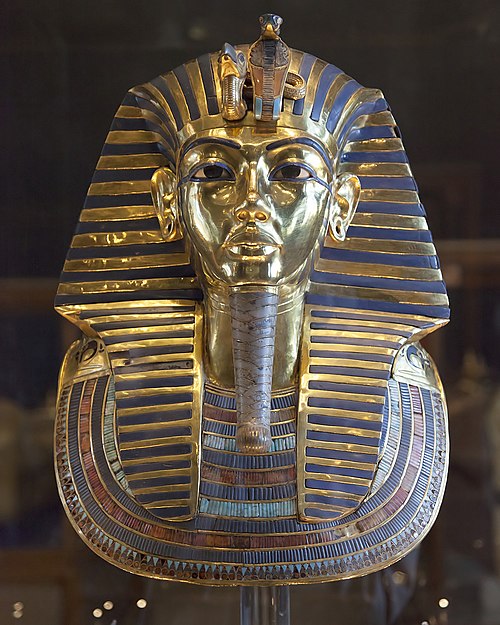
The Mask of Tutankhamun from tomb KV62 in the Valley of the Kings. Pharaohs' tombs were provided with vast quantities of wealth

The Narmer Palette depicts the unification of the Two Lands.

A guardian statue wearing the red crown which reflected the facial features of the reigning king, probably Amenemhat II or Senwosret II, and which functioned as a divine guardian for the imiut. Made of cedar wood and plaster c. 1919–1885 BCE

Uraeus depicted on king Den, ivory label found at his tomb in Abydos, c. 3000 BCE, British Museum, London
Nectanebo II
Videos
Nectanebo II was the last native ruler of ancient Egypt, as well as the third and last pharaoh of the Thirtieth Dynasty, reigning from 358 to c.340 BC.
Pharaoh
…Five-name titulary First monarch Narmer or Menes (as King of Upper and Lower Egypt) Akhenaten or Thutmose III (first to be called Pharaoh) Last monarch Nectanebo II (last native) Cleopatra and Caesarion (last Hellenistic pharaohs) Maximinus Daza (last to have Egyptian royal titulary) Formation c. 3150 BCE (first…

Head of Nectanebo II, Museum of Fine Arts of Lyon

Isis and Nectanebo II

Egyptian gold stater of Nectanebo II. The design on the reverse consists of Egyptian hieroglyphs meaning "good gold": pectoral necklace (nebu, "gold") crossing horizontally over a windpipe and heart (nefer, "good").

Black siltstone obelisk of Pharaoh Nectanebo II. According to the vertical inscriptions he set up this obelisk at the doorway of the sanctuary of Thoth, the Twice-Great, Lord of Hermopolis. Today, it is located in the British Museum, London.