Philippicae
Videos
The Philippics are a series of 14 speeches composed by Cicero in 44 and 43 BC, condemning Mark Antony. Cicero likened these speeches to those of Demosthenes against Philip II of Macedon; both Demosthe
Cicero's Philippics, 15th-century manuscript, British Library


Bust of Marcus Tullius Cicero, 1st century AD, Capitoline Museums, Rome

Flavian-era bust traditionally identified as Mark Antony, Vatican Museums
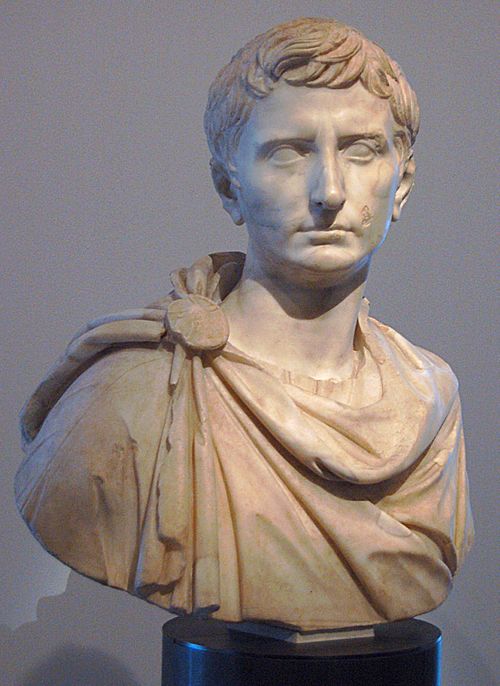
Bust of Octavian, c. 30 BC. Capitoline Museums, Rome
Decimus Junius Brutus Albinus was a Roman general and politician of the late republican period and one of the leading instigators of Julius Caesar's assassination. He had previously been an important
Decimus Junius Brutus Albinus on the far right leading Julius Caesar to Pompey's Theater. Painting by Abel de Pujol.


Denarius of Decimus Brutus minted in 48 BC. The obverse legend reads "Aulus Postumius consul", but it is unknown which one is depicted here (there were six consuls of that name). The reverse with the wreath of wheat-ears might refer to a supply of wheat ordered by this man.

This denarius minted by Decimus Brutus in 48 BC, recalls his military service in Gaul, as the obverse features the head of Mars (the Roman god of War), and the reverse shows Gallic carnyces and shields.

Denarius of Decimus Brutus, minted in 48 BC. The obverse depicts Pietas, while the reverse shows clasped hands around a caduceus, alluding to Julius Caesar's policy of reconciliation during the Civil War (Decimus still supported Caesar at this time).