Pictorialism
Videos
Pictorialism is an international style and aesthetic movement that dominated photography during the later 19th and early 20th centuries. There is no standard definition of the term, but in general it
"The Black Bowl", by George Seeley, circa 1907. Published in Camera Work, No 20 (1907)


"The Rose", by Eva Watson-Schütze, 1905

"Fading Away", by Henry Peach Robinson, 1858
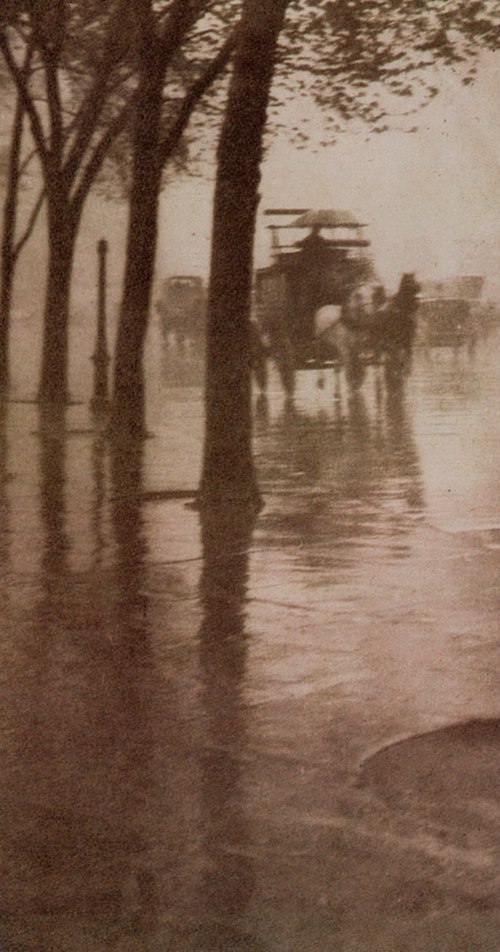
"Spring Showers, the Coach", by Alfred Stieglitz, 1899–1900
Alvin Langdon Coburn
Videos
Alvin Langdon Coburn was an American photographer who became a key figure in the development of pictorialism. He became the first major photographer to emphasize the visual potential of elevated viewp
Pictorialism
…continued to develop, the interactions between painting and photography became increasingly reciprocal. More than a few pictorial photographers, including Alvin Langdon Coburn, Edward Steichen, Gertrude Käsebier, Oscar Gustave Rejlander, and Sarah Choate Sears, were originally trained as painters or took up painting in addition…

Self-portrait, 1905

"Spider-webs", by Alvin Langdon Coburn. Photogravure published in Camera Work, No 21, 1908

"Bernard Shaw", by Alvin Langdon Coburn. Photogravure published in Camera Work, No 21, 1908

"Rodin", by Alvin Langdon Coburn. Photogravure published in Camera Work, No 21, 1908