Planetary nebula
Videos
A planetary nebula is a type of emission nebula consisting of an expanding, glowing shell of ionized gas ejected from red giant stars late in their lives.
Some famous planetary nebulae


X-ray/optical composite image of the Cat's Eye Nebula (NGC 6543)

Two cameras aboard Webb Telescope captured the latest image of this planetary nebula, cataloged as NGC 3132, and known informally as the Southern Ring Nebula. It is approximately 2,500 light-years away.

NGC 6326, a planetary nebula with glowing wisps of outpouring gas that are lit up by a binary central star
Sun
Videos
The Sun is the star located at the centre of the Solar System. It is a massive sphere of hot plasma, heated to incandescence by nuclear fusion reactions in its core, radiating the energy from its surf
Planetary nebula
…term is still used. All planetary nebulae form at the end of the life of a star of intermediate mass, about 1-8 solar masses. It is expected that the Sun will form a planetary nebula at the end of its life cycle. They are relatively short-lived phenomena, lasting perhaps a few tens of millennia, compared…
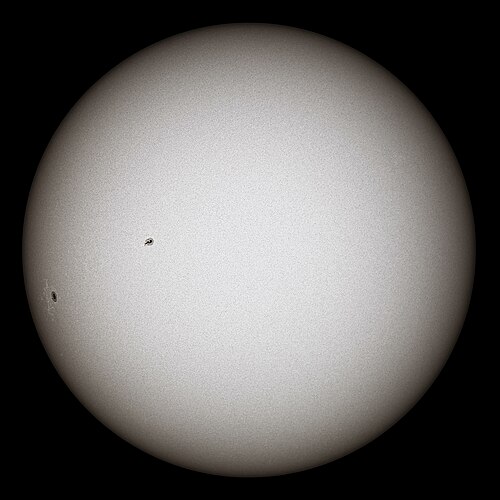
The Sun as viewed through a clear solar filter

The photosphere is structured by convection cells referred to as granules.

The Sun's transition region taken by Hinode's Solar Optical Telescope

During a total solar eclipse the solar corona can be seen with the naked eye.