Playmaker
Videos
In association football, a playmaker is a footballer who controls the flow of the team's play, and is often involved in offensive and defensive passing moves which lead to goals, through their vision,
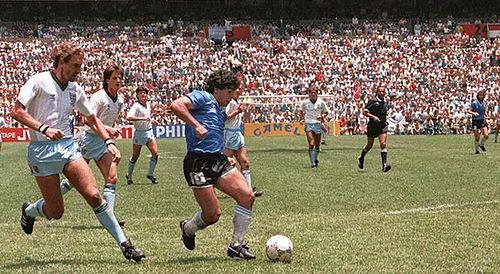
Attacking midfielder Diego Maradona (shirt number 10) right before scoring the "Goal of the Century" for Argentina against England in the quarter-finals of the 1986 World Cup in Mexico

Deep-lying playmaker Andrea Pirlo playing for Italy against England in the quarter-finals of Euro 2012

Luka Modrić is known for his ability to blend advanced playmaking with box-to-box play and deep-lying positioning.
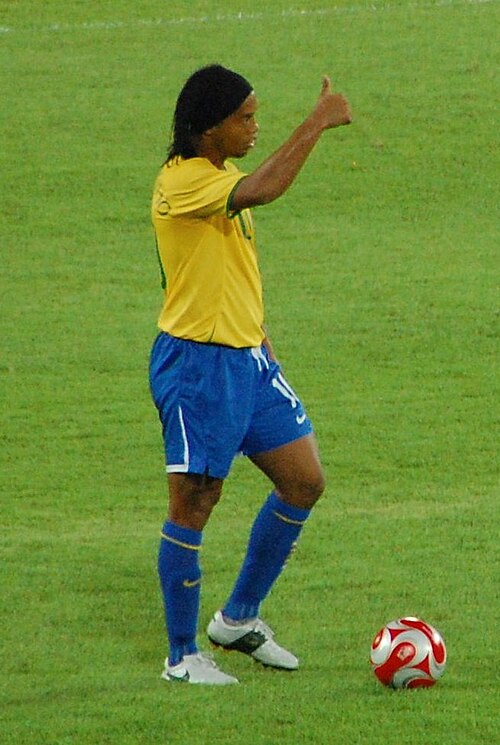
Ronaldinho – pictured with Brazil at the 2008 Summer Olympics – occasionally played as an inverted winger throughout his career.
Midfielder
Videos
In association football, a midfielder takes an outfield position primarily in the middle of the pitch. Midfielders may play an exclusively defensive role breaking up attacks, and are in that case know
Playmaker
…They are sometimes called the "number 10" of the team, as they often wear the number 10 jersey. In English football, the term overlaps somewhat with an attacking midfielder, although playmakers are not necessarily constrained to a single position. Several playmakers can also operate on the wings or as a creative, supporting…

Spanish midfielder Xavi was known for his passing and vision with Barcelona.

A box-to-box midfielder, Steven Gerrard has been lauded for his effectiveness both offensively and defensively at Liverpool.
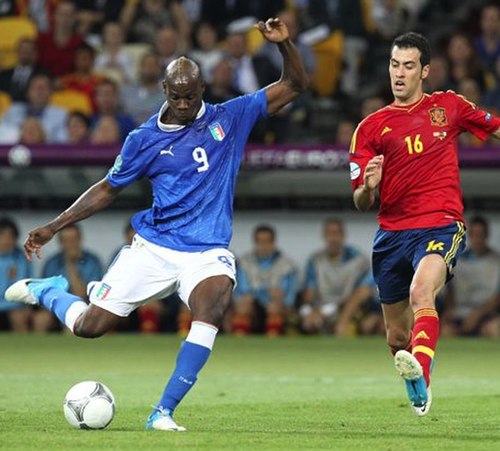
Spain holding midfielder Sergio Busquets (16, red) moves to block a shot from Italian striker (9, blue) Mario Balotelli.

Croatian midfielder Luka Modrić was regarded as an emblematic "box-to-box" playmaker with Real Madrid.