Plinian eruption
Videos
Plinian eruptions or Vesuvian eruptions are volcanic eruptions characterized by their similarity to the eruption of Mount Vesuvius in 79 AD, which destroyed the ancient Roman cities of Herculaneum and
1822 artist's impression of the eruption of Mount Vesuvius in 79, depicting what the AD 79 eruption may have looked like, by the English geologist George Julius Poulett Scrope. Lightning is depicted around the rising column of ash and gas.


A stone pine, the type of tree used by Pliny the Younger to describe the eruption
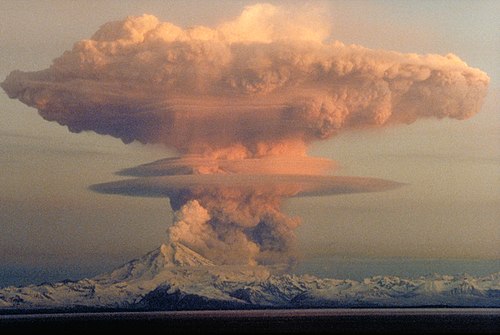
Eruption cloud from Redoubt Volcano on 21 April 1990 as viewed to the west from the Kenai Peninsula, more than 60 km (37 mi) from the volcano's summit

April 2015, subplinian eruption of Calbuco
1883 eruption of Krakatoa
Videos
Between 19 May and 21 October 1883, the volcanic island of Krakatoa began erupting, lasting more than five months. On 27 August, the island had its most significant eruption, which destroyed over 70%
Plinian eruption
…The 1815 eruption of Mount Tambora in the island of Sumbawa, Indonesia. The 1883 eruption of Krakatoa in Sunda Strait, Indonesia. The 1886 eruption of Mount Tarawera in New Zealand…

Photograph of the eruption

Lithograph of the eruption c. 1888

Coral block thrown onto the shore of Java by the tsunami

Rhyodacite pumice from the late August 1883 eruption of Krakatoa. This rock floated across the Indian Ocean for almost a year before it washed ashore at Takwa Beach, Kenya, East Africa.