Pollard script
Videos
Photos
The Pollard script, also known as Pollard Miao or Miao, is an abugida loosely based on the Latin alphabet and invented by Methodist missionary Sam Pollard. Pollard invented the script for use with A-Hmao, one of several Miao languages spoken in southeast Asia. The script underwent a series of revisions until 1936, when a translation of the New Testament was published using it.

Miao book in Pollard script, in the Yunnan Nationalities Museum, Kunming, Yunnan, China.
Abugida
Videos
Photos
An abugida – sometimes also called alphasyllabary, neosyllabary, or pseudo-alphabet – is a segmental writing system in which consonant–vowel sequences are written as units; each unit is based on a consonant letter, and vowel notation is secondary, similar to a diacritical mark. This contrasts with a full alphabet, in which vowels have status equal to consonants, and with an abjad, in which vowel marking is absent, partial, or optional – in less formal contexts, all three types of the script may be termed "alphabets". The terms also contrast them with a syllabary, in which a single symbol denotes the combination of one consonant and one vowel.

A 19th-century manuscript in the Devanagari script
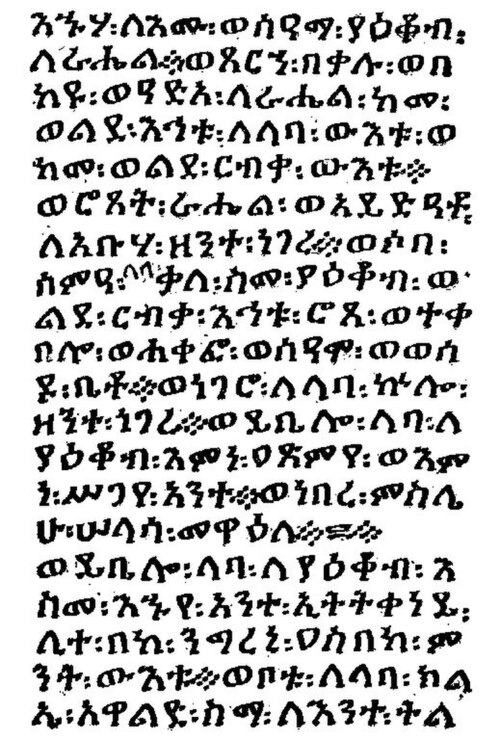
The Ge'ez script, an abugida of Eritrea and Ethiopia