Pollution
Videos
Pollution is the introduction of contaminants into the natural environment that cause harm. Pollution can take the form of any substance or energy. Pollutants, the components of pollution, can be eith

Smog in the center of Moscow, Russia in August 2010

An industrial area, with a power plant, south of Yangzhou's downtown, China

A litter trap catches floating waste in the Yarra River, east-central Victoria, Australia.

Air pollution control system, known as a thermal oxidizer, decomposes hazard gases from industrial air streams at a factory in the United States.
Water pollution
Videos
Water pollution is the contamination of water bodies, which has a negative impact on how they can be used. It is usually caused by human activities. Water bodies include lakes, rivers, oceans, aquifer
Pollution
…persistent pollutants may have legacy pollution long after the source of the pollution is stopped. Major forms of pollution include air pollution, water pollution, litter, noise pollution, plastic pollution, soil contamination, radioactive contamination, thermal pollution, light pollution, and visual pollution…

Garbage floating in water, Circular Quay, Sydney, Australia

Poster to teach people in South Asia about human activities leading to the pollution of water sources

Bauxite residue is an industrial waste that is dangerously alkaline and can lead to water pollution if not managed appropriately (photo from Stade, Germany).
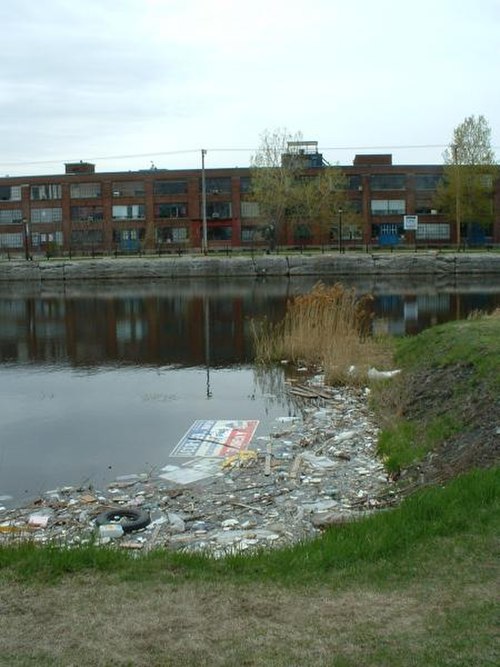
Solid waste and plastics in the Lachine Canal, Canada