Pompa circensis
Videos
In ancient Rome, the pompa circensis was the procession that preceded the official games held in the circus as part of religious festivals and other occasions.

The presiding magistrate at the pompa circensis rode in a two-horse chariot; behind him are the young nobiles who led the parade on horseback (4th-century opus sectile from the Basilica of Junius Bassus)

A late 16th-century etching, from a book by the antiquarian Onofrio Panvinio published posthumously, reimagining the pompa circensis within the Circus Maximus but conflating it with a triumphal procession, labeling the elements of the parade in Latin
Circus Maximus
Videos
The Circus Maximus is an ancient Roman chariot-racing stadium and mass entertainment venue in Rome, Italy. In the valley between the Aventine and Palatine hills, it was the first and largest stadium i
Pompa circensis
…and through the clivus Capitolinus came to the Roman Forum. It then proceeded along the Via Sacra and passed through the Vicus Tuscus to arrive at the Circus Maximus. The magistrate who presided over the games rode in a two-horse chariot (biga) and wore the traditional attire of the triumphing general (triumphator…

View of the Circus site from the south-east. The tower in the foreground is part of a medieval fortification.
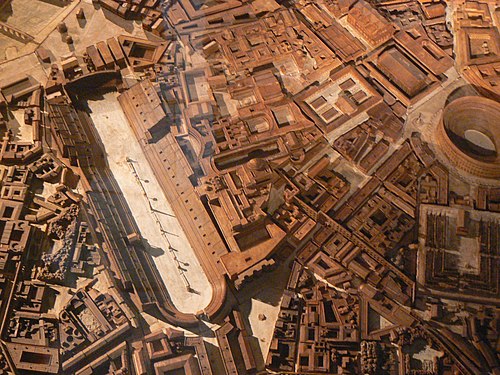
Model of Rome in the 4th century AD, by Paul Bigot. The Circus lies between the Aventine (left) and Palatine (right); the oval structure to the far right is the Colosseum.

View of the Circus site from the south-east in 2019

The Obelisco Flaminio, now in the Piazza del Popolo, was once part of the dividing barrier (spina) at the Circus Maximus