Post-imperial Assyria
Videos
The post-imperial period was the final stage of ancient Assyrian history, covering the history of the Assyrian heartland from the fall of the Neo-Assyrian Empire in 609 BC to the final sack and destru
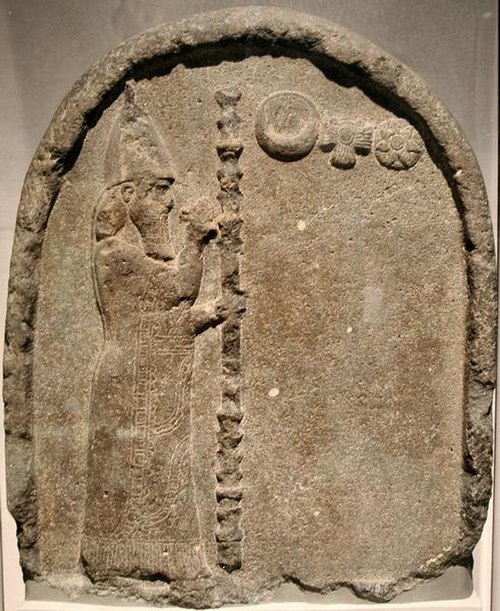
Stele of the Neo-Babylonian king Nabonidus (r. 556–539 BC), found at Harran

Depiction of an Assyrian soldier on the tomb of Xerxes I at Naqsh-e Rostam

Detail of a stele in the style of the Neo-Assyrian royal steles erected in Assur in the 2nd century AD (under Parthian rule) by the local ruler Rʻuth-Assor

The Great Iwans at Hatra. The rebuilt Ashur temple at Assur was likely similar to this building in appearance and size.
Nabonidus
Videos
Nabonidus was the last king of the Neo-Babylonian Empire, ruling from 556 BC to the fall of Babylon to the Achaemenian Empire under Cyrus the Great in 539 BC. Nabonidus was the last native ruler of an
Nabonidus, detail of a stele in the British Museum, probably from Babylon, Iraq


Relief of Ashurbanipal, who ruled as king of Assyria 669–631 BC. Nabonidus emulated elements of Ashurbanipal and his dynasty, the Sargonids. Some historians believe that Nabonidus was a descendant of Ashurbanipal, or Ashurbanipal's father Esarhaddon.

Nabonidus as depicted in a stele from Harran

A granite stele of Nabonidus