Post-punk
Videos
Post-punk is a loosely defined music genre and period that emerged in the late 1970s in the wake of punk rock. The concept was originally outlined by Jon Savage in his "New Musick" editorial for Sound
Jon Savage's 1977 Sounds editorial "New Musick" outlined a new experimental direction in punk.


David Bowie and Iggy Pop, while in Berlin, recorded art rock albums, which became influential to post-punk.

American rock band Television in a 1977 publicity photo promoting their debut album, Marquee Moon, a foundational influence on post-punk

Sex Pistols at Manchester's Lesser Free Trade Hall on 4 June and 20 July 1976 inspired the formation of Joy Division, the Fall, the Smiths, Simply Red, Magazine, Buzzcocks, Factory and Creation Records.
Punk rock
Videos
Punk rock is a genre of rock music that emerged in the mid-1970s. Rooted in 1950s rock and roll and 1960s garage rock, punk bands rejected the overproduction and corporate nature of mainstream arena r
Post-punk
…Post-punk (or postpunk) is a loosely defined music genre and period that emerged in the late 1970s in the wake of punk rock. The concept was originally outlined by Jon Savage in his "New Musick" editorial for Sounds magazine in November 1977. The term has been noted for…

1980s punks with leather jackets and dyed mohawk hairstyles
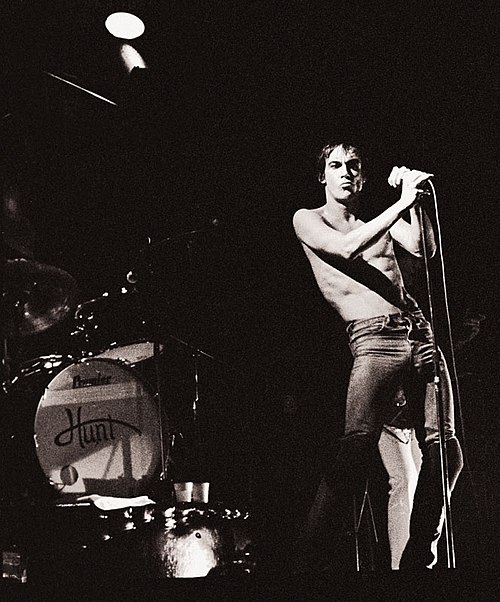
Iggy Pop, sometimes referred to as the "godfather of punk."

The Kingsmen in 1966. Their cover of "Louie, Louie" was later referred to as punk rock's "ur-text".

The Kinks' "You Really Got Me" was later cited as an early progenitor of punk rock.