Potentiality and actuality
Videos
In philosophy, potentiality and actuality are a pair of closely connected principles which Aristotle used to analyze motion, causality, ethics, and physiology in his Physics, Metaphysics, Nicomachean
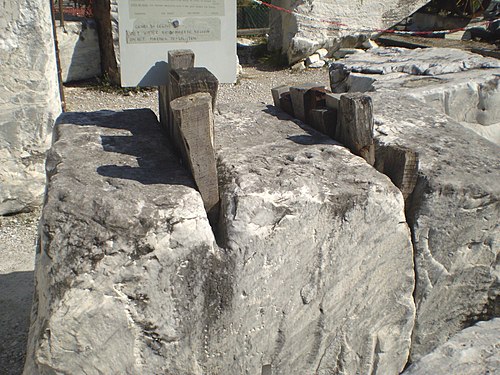
A marble block in Carrara. Could there be a particular sculpture already existing in it as a potentiality? Aristotle wrote approvingly of such ways of talking, and felt it reflected a type of causation in nature which is often ignored in scientific discussion.

Gottfried Wilhelm Leibniz was the source of the modern adaptations of Aristotle's concepts of potentiality and actuality.
Nous
Videos
Nous, from Ancient Greek: νοῦς, is a concept from classical philosophy, sometimes equated to intellect or intelligence, for the faculty of the human mind necessary for understanding what is true or re

The earliest surviving text that uses the word nous is the Iliad. Agamemnon says to Achilles: "Do not thus, mighty though you are, godlike Achilles, seek to deceive me with your wit (nous); for you will not get by me nor persuade me."

Anaxagoras