Potsdam Declaration
Videos
The Potsdam Declaration, or the Proclamation Defining Terms for Japanese Surrender, was a statement that called for the surrender of all Japanese armed forces during World War II. On July 26, 1945, Un
Harry S. Truman and Winston Churchill at "Little White House", Potsdam, Germany in July 1945


Winston Churchill with his daughter and aide-de-camp, Mary, at their residence in Potsdam, Germany in July 1945
On 6 and 9 August 1945, the United States detonated two atomic bombs over the Japanese cities of Hiroshima and Nagasaki, respectively, during the final days of World War II. The aerial bombings killed
Potsdam Declaration
…stretched for more than 1 mile (1.6 kilometers). However, the word mokusatsu can also mean "withholding comment." Since then, it has been alleged that the bombings of Hiroshima and Nagasaki were attributable to English translations of mokusatsu having misrepresented Suzuki as rejecting the terms of the Potsdam Declaration; however, this…

Atomic bomb mushroom clouds over Hiroshima (left) and Nagasaki (right)

Situation of the Pacific War on 1 August 1945 White and green: Areas controlled by Japan Red: Areas controlled by the Allies Gray: Areas controlled by the Soviet Union (neutral)
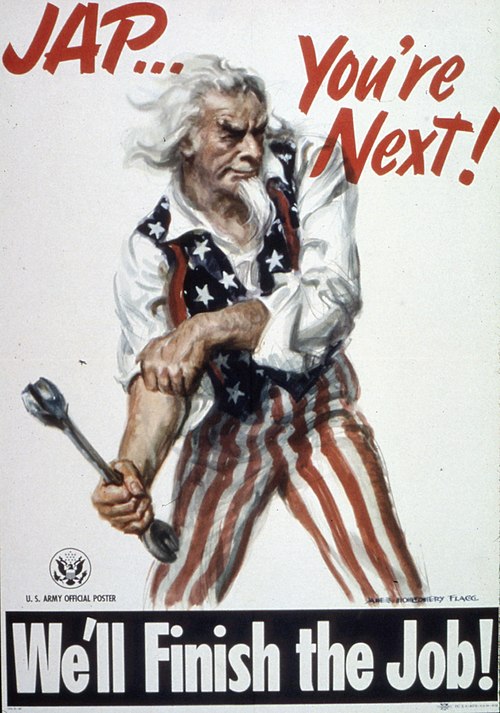
U.S. Army propaganda poster depicting Uncle Sam preparing the public for the invasion of Japan after the end of the war with Germany and Italy

A B-29 over Osaka on 1 June 1945