Pre Rup
Videos
Pre Rup is a Hindu temple at Angkor, Cambodia, built as the state temple of Khmer king Rajendravarman and dedicated in 961 or early 962. It is a temple mountain of combined brick, laterite and sandsto
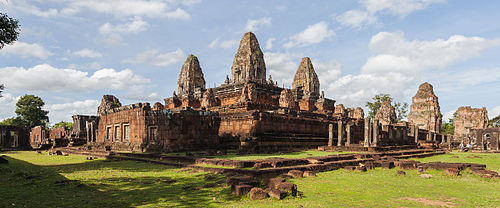
Pre Rup, Angkor, Camboya, 2013 08 16, DD 13

Terminal pyramid of Pre Rup (with the "cistern" foreground)

View from the terminal pyramid

Central prasat with two of the four other prasats visible in front
East Mebon
Videos
The East Mebon is a 10th Century temple at Angkor, Cambodia. Built during the reign of King Rajendravarman, it stands on what was an artificial island at the center of the now dry East Baray reservoir
Pre Rup
…directions as the service progressed. Located just south of the East Baray, or eastern reservoir, Pre Rup is aligned on a north–south axis with the East Mebon temple, which is located on what was an artificial island in the baray. The East Mebon was also a creation of the reign of Rajendravarman. Pre Rup's…

Mebon Oriental, Angkor, Camboya, 2013 08 17, DD 05

Main gate

East Mebon guardian elephant

Elephant sculpture at the East Mebon