Predation
Videos
Predation is a biological interaction in which one organism, the predator, kills and eats another organism, its prey. The predator-prey relationship is one of a family of common feeding behaviours tha
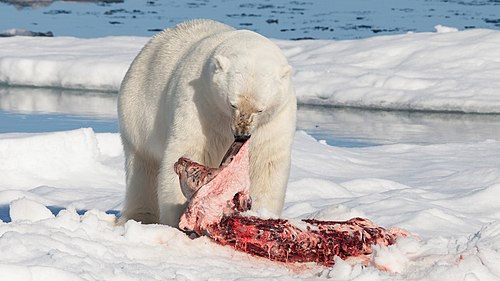
Solitary predator: a polar bear feeds on a bearded seal it has killed.

Social predators: meat ants cooperate to feed on a cicada far larger than themselves.

Spider wasps paralyse and eventually kill their hosts, but are considered parasitoids, not predators.

Carnivorous plant: sundew engulfing an insect
Apex predator
Videos
An apex predator, also known as a top predator or superpredator, is a predator at the top of a food chain with few natural predators of their own, if any.
Predation
…Carnivores that feed on herbivores are secondary consumers; their predators are tertiary consumers, and so forth. At the top of this food chain are apex predators such as lions. Many predators however eat from multiple levels of the food chain; a carnivore may eat both secondary and tertiary consumers. This means…

The lion is the world's second-largest big cat. Healthy adults are apex terrestrial predators in Africa.

The saltwater crocodile is the largest living reptile and the dominant predator throughout its range.

The Megalodon, the largest shark to have ever existed, had a major impact on global marine ecosystems.

The wolf is both an apex predator and a keystone species, affecting its prey's behaviour and the wider ecosystem.