Prehistoric agriculture in the Southwestern United States
The agricultural practices of the Native Americans inhabiting the American Southwest, which includes the states of Arizona and New Mexico plus portions of surrounding states and neighboring Mexico, are influenced by the low levels of precipitation in the region. Irrigation and several techniques of water harvesting and conservation were essential for successful agriculture. To take advantage of limited water, the southwestern Native Americans utilized irrigation canals, terraces (trincheras), rock mulches, and floodplain cultivation. Success in agriculture enabled some Native Americans to live in communities which numbered in the thousands as compared to their former lives as hunter-gatherers in which their bands numbered only a few dozen.
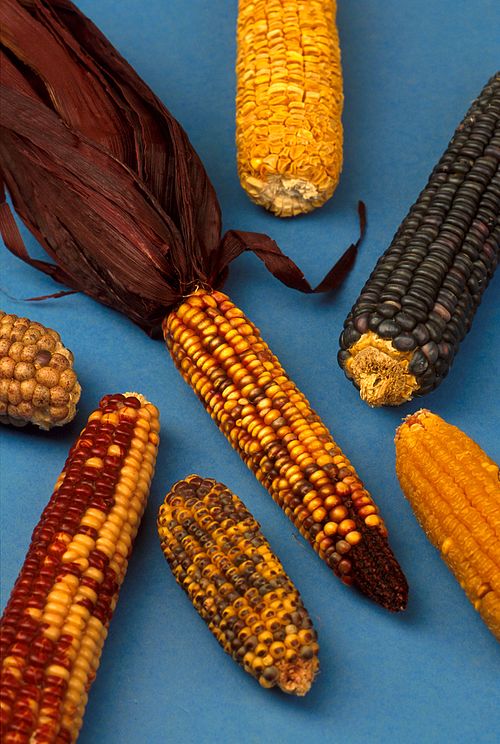
Varieties of maize
At Mesa Verde, the people lived below and farmed on top of the mesa contending with both short growing seasons and frequent drought
At Chaco Canyon, the Ancestral Puebloans captured rainwater runoff from the mesas and directed it to their small fields, thus enabling them to create a complex society in an austere high-altitude desert
The rock walls called trincheras are visible in this photo taken at the Cerro de Trincheras near Trincheras, Sonora. Agriculture at this site dates from 1300 to 1500 CE
Hohokam was a culture in the North American Southwest in what is now part of south-central Arizona, United States, and Sonora, Mexico. It existed between 300 and 1500 CE, with cultural precursors possibly as early as 300 BCE. Archaeologists disagree about whether communities that practiced the culture were related or politically united. According to local oral tradition, Hohokam societies may be the ancestors of the historic Akimel and Tohono Oʼodham in Southern Arizona.
The Great House at the Casa Grande Ruins National Monument
Hiking trail leading to Indian Mesa (in the background): The hiking trail is located on a portion of a canal which the Hohokam built in 700 CE. The canal is now filled with soil.
Sears-Kay Ruin Fort Mystery Room before circa 1050 CE: This room had rounded corners.
Sears-Kay Ruin Fort rooms with square corners, circa 1050 CE