The Presidential Council for Minority Rights is a non-elected government body in Singapore established in 1970, the main function of which is to scrutinize most of the bills passed by Parliament to en

Parliament House, Singapore, photographed in December 2008. The Presidential Council for Minority Rights meets in this building to scrutinize certain types of legislation for provisions discriminating against racial or religious communities in Singapore

Copies of the PCMR's annual reports

One of the longest serving members of the PCMR, former Prime Minister of Singapore Lee Kuan Yew was a permanent member of the Council at the time of his death on 23 March 2015

Prime Minister of Singapore Lee Hsien Loong at the World Economic Forum on East Asia in Jakarta, Indonesia, on 12 June 2011. The PM may certify that, for certain reasons, a bill does not need to be referred to the PCMR.
The powers of the president of Singapore are divided into those which the president may exercise at their own discretion, and those they must exercise in accordance with the advice of the Cabinet of S
Presidential Council for Minority Rights
…on the advice of the Cabinet. If the President does not concur with Cabinet's advice, he may veto appointments. However, he is required to consult the Council of Presidential Advisers ("CPA"), and if the CPA does not concur with his view, Parliament may override his decision with a resolution passed with a two-thirds majority vote…

The Istana, the official residence of the president of Singapore, photographed in January 2009
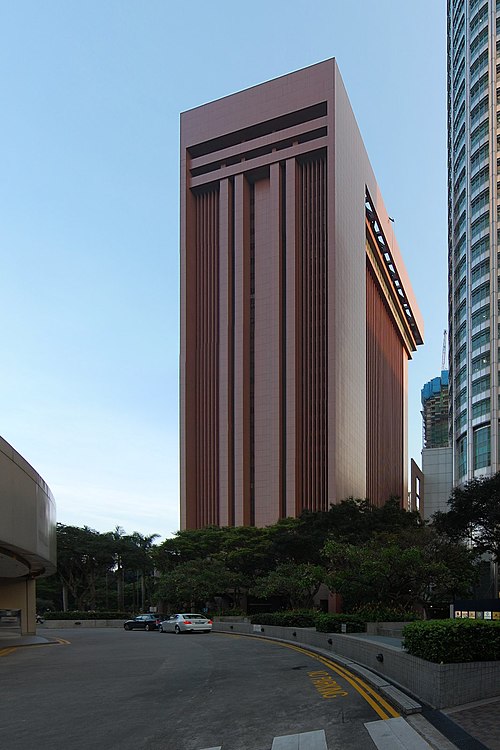
The president has personal discretion as to whether to approve budgets or financial transactions of specified statutory boards and Government companies that are likely to draw on past reserves. The Monetary Authority of Singapore, photographed here in September 2009, is one such statutory board.
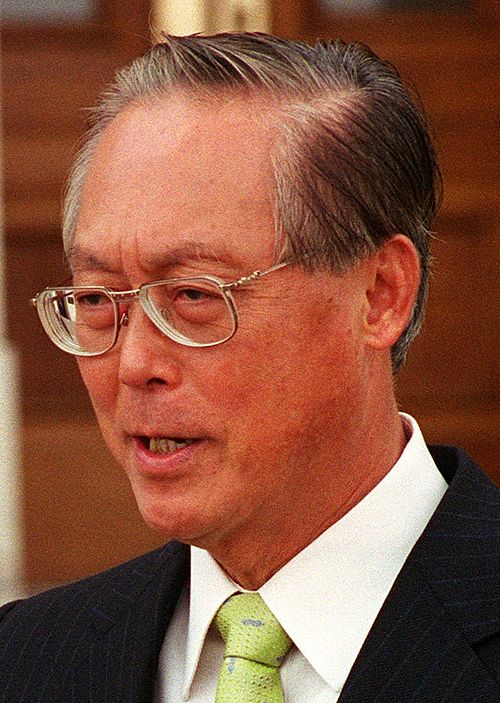
Prime Minister Goh Chok Tong in June 2001

A Republic of Singapore Air Force Super Puma on the flight deck of dock landing ship USS Harpers Ferry during a bilateral maritime exercise in 2007. The Chiefs of the Air Force, Army and Navy are among the office holders whose appointments and dismissals must be concurred in by the president.