Pro Sestio
Videos
Pro Sestio was an oration given by the Roman orator and politician Marcus Tullius Cicero in defence of Publius Sestius for charges of public violence in February or March 56 BC. Sestius was a friend o
This bust of Cicero dates from the 1st century AD. Cicero was exiled during the tribunate of Publius Clodius Pulcher and, in part due to the efforts of the Publius Sestius for whom Cicero spoke, was recalled to Rome.

Catilinarian conspiracy
Videos
The Catilinarian conspiracy, sometimes Second Catilinarian conspiracy, was an attempted coup d'état by Lucius Sergius Catilina to overthrow the Roman consuls of 63 BC – Marcus Tullius Cicero and Gaius
Pro Sestio
…Roman politics in the 50s BC. He then defends Sestius' character and career, giving an overview of his good deeds for the community – such as during the Catilinarian conspiracy – and towns across Italy. He then gives an overview of his exile at the hands of his enemies: the tribune Publius Clodius Pulcher and the consuls of…
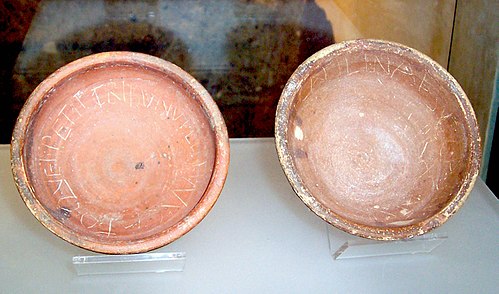
Bowls containing food distributed in electoral canvasses. The bowl to the right was commissioned by Lucius Cassius Longinus and distributed in support of Catiline's consular candidacy in 63 BC. The bowl on the left was distributed by Marcus Porcius Cato in a coeval campaign for the plebeian tribunate.

A 1st century AD depiction of Cicero, one of the consuls in 63 BC and one of the leaders of the response against Catiline, today in the Capitoline Museum.

A denarius minted by Lucius Scribonius Libo in 62 BC. The portrayal of Bonus Eventus on the obverse likely commemorates the repression of Catiline's conspiracy.

A denarius minted by Lucius Aemilius Paullus in 62 BC commemorating Catiline's defeat. It depicts the goddess Concordia, on the left. Berry 2020, p. 54 argues that Paullus attempted to connect Catiline's defeat to peace.