Propaganda in Nazi Germany
Videos
Propaganda was a tool of the Nazi Party in Germany from its earliest days to the end of the regime in May 1945 at the end of World War II in Europe. As the party gained power, the scope and efficacy o
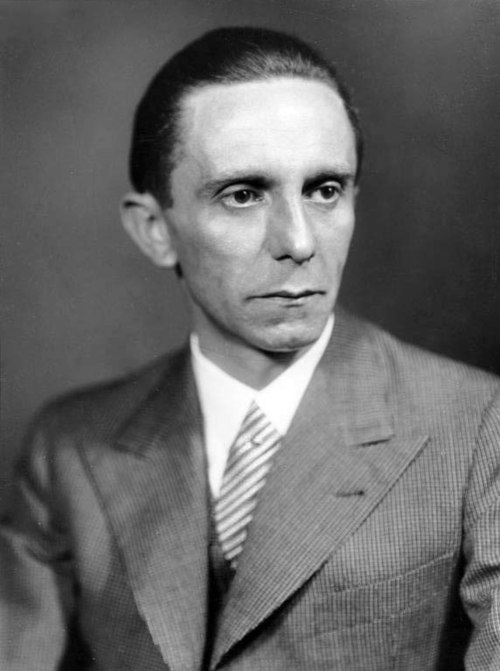
Joseph Goebbels, the head of Nazi Germany's Ministry of Public Enlightenment and Propaganda
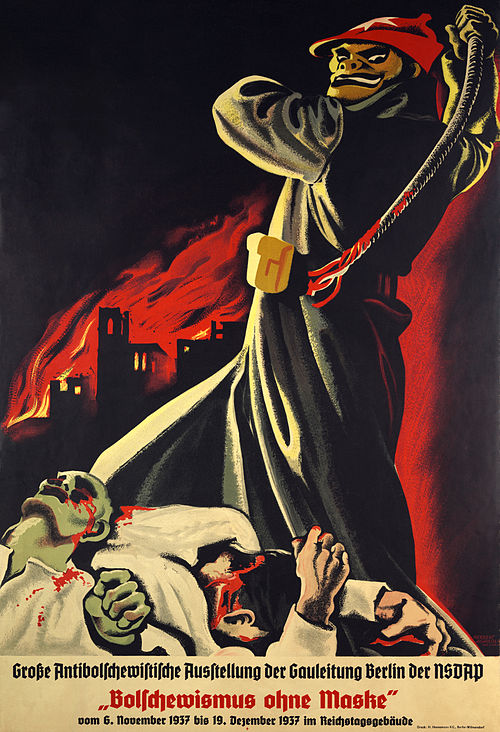
A 1937 anti-Bolshevik Nazi propaganda poster. The translated caption reads: "Bolshevism without a mask – large anti-Bolshevik exhibition of the NSDAP Gauleitung Berlin from 6 November to 19 December 1937 in the Reichstag building".

Propaganda recruiting poster of the 27th SS Volunteer Division "Langemarck" with the title "Flemings all in the SS Langemarck!"

German soldiers removing Polish government insignia in Gdynia soon after the invasion of Poland in 1939
Joseph Goebbels
Videos
Paul Joseph Goebbels was a German politician and philologist who was the Gauleiter of Berlin, chief propagandist for the Nazi Party, and then Reich Minister of Propaganda from 1933 until his suicide i
Propaganda in Nazi Germany
…Beobachter, a newspaper published by the Nazi Party (NSDAP) from December 1920 onwards, whose circulation reached 26,175 in 1929. It was joined in 1927 by Joseph Goebbels's Der Angriff, another unabashedly and crudely propagandistic paper. During most of the Nazis' time in opposition, their means of propaganda remained…

Goebbels in 1933

Goebbels speaks at a political rally (1932). This body position, with arms akimbo, was intended to show the speaker as being in a position of authority.
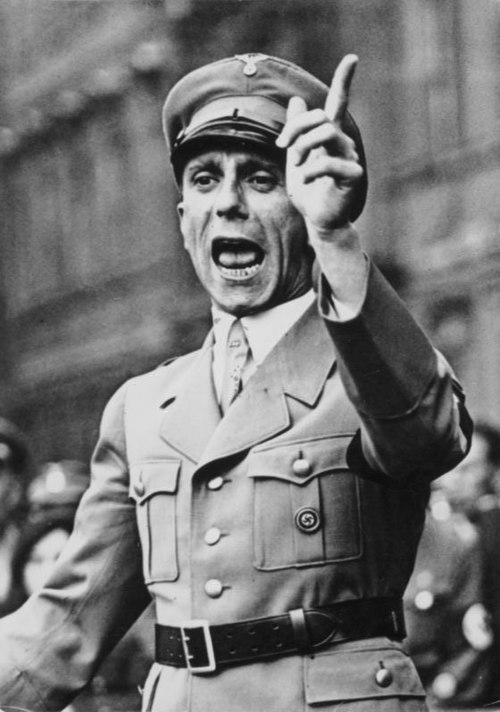
Goebbels giving a speech in Lustgarten, Berlin, August 1934. This hand gesture was used while delivering a warning or threat.

Goebbels used the death of Horst Wessel (pictured) in 1930 as a propaganda tool against "Communist subhumans".