Protectorate
Videos
A protectorate, in the context of international relations, is a state that is under protection by another state for defence against aggression and other violations of law. It is a dependent territory that enjoys autonomy over most of its internal affairs, while still recognizing the suzerainty of a more powerful sovereign state without being a possession. In exchange, the protectorate usually accepts specified obligations depending on the terms of their arrangement. Usually protectorates are established de jure by a treaty. Under certain conditions—as with Egypt under British rule (1882–1914)—a state can also be labelled as a de facto protectorate or a veiled protectorate.

1960 stamp of Bechuanaland Protectorate with the portraits of Queen Victoria and Queen Elizabeth II

1 Sapèque – Protectorate of Tonkin (1905)
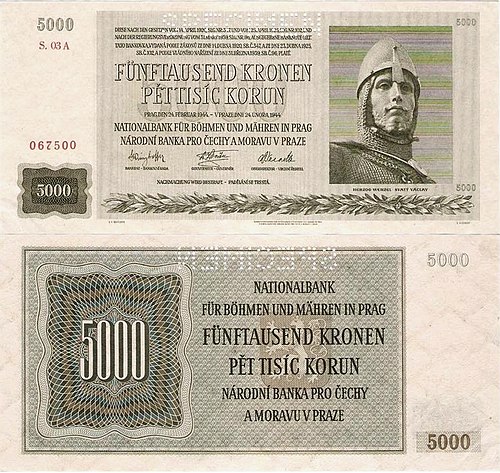
5000 kronen – Protectorate of Bohemia and Moravia (1939–1945)
Colonial Nigeria
Videos
Colonial Nigeria was ruled by the British Empire from the mid-nineteenth century until 1960 when Nigeria achieved independence. Britain annexed Lagos in 1861 and established the Oil River Protectorate in 1884. British influence in the Niger area increased gradually over the 19th century, but Britain did not effectively occupy the area until 1885. Other European powers acknowledged Britain's dominance over the area in the 1885 Berlin Conference.


British stamps used in 1898 at Akassa by the Royal Niger Company

The British Colonial Office in Westminster, created in the 1860s by architect George Gilbert Scott; illustrated in 1875

Contemporary photograph of the same building, now housing the Foreign and Commonwealth Office