Province House (Nova Scotia)
Videos
Province House in Halifax is where the Nova Scotia legislative assembly, known officially as the Nova Scotia House of Assembly, has met every year since 1819, making it the longest serving legislative

Province House

Governor's House, built 1749 on the site of Province House

Site of First Legislative Assembly Plaque, Royal Nova Scotia Historical Society, Scotia Square, Halifax, Nova Scotia.

House of Assembly, Joseph Howe (left) and James William Johnston (right), both paintings by Henry Sandham
Palladian architecture
Videos
Palladian architecture is a European architectural style derived from the work of the Venetian architect Andrea Palladio. What is today recognised as Palladian architecture evolved from his concepts o
Province House (Nova Scotia)
…in Canada. The building is Canada's oldest house of government. Standing three storeys tall, the structure is considered one of the finest examples of Palladian architecture in North America. Province House was built on the same location as the previous Governor's House, erected by Edward Cornwallis in 1749. (Cornwallis…
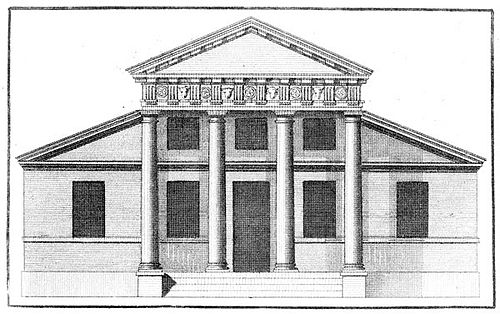
A villa with a superimposed portico, from Book IV of Palladio's I quattro libri dell'architettura, in an English translation published in London, 1736

Plan for Palladio's Villa La Rotonda (c. 1565) – features of the house were incorporated in numerous Palladian-style houses throughout Europe over the following centuries.
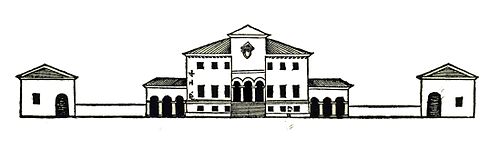
"True Palladianism" at the Villa Godi (1537–1542) – from Palladio's I quattro libri dell'architettura. The flanking pavilions are agricultural buildings, not part of the villa. In the 18th century, the connecting colonnades evolved as enfilades of rooms, while the pavilions often became self-contained wings or blocks – a common feature of 18th century Palladianism.

Villa Capra "La Rotonda" (begun c. 1565) – one of Palladio's most influential designs