Purdah
Videos
Pardah or purdah is a religious and social practice of sex segregation prevalent among some Muslim, Zoroastrian, and Hindu communities in South Asia. The purdah garment is the same as a burqa, or yash
Ladies of Caubul (1848 lithograph, by James Rattray) showing the lifting of purdah in zenana areas – Oriental and India Office Collection, British Library.


Photograph of a Rajput royal silver zenana carriage in the princely state of Baroda, India. 1895, Oriental and India Office Collection, British Library
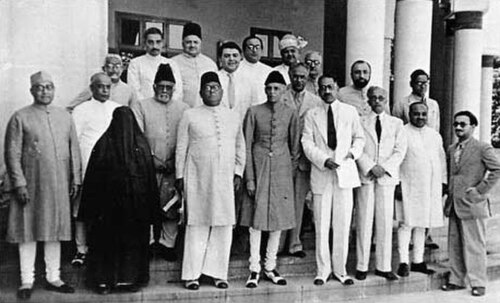
Picture of a meeting of the All-India Muslim League in Lahore in 1940 showing a woman in a body length burqa.

Protest against non-representation of women
Ghoonghat
Videos
A ghoonghat is a headcovering or headscarf, worn primarily in the Indian subcontinent, by some married Hindu and Jain women to cover their heads, and often their faces. Generally aanchal or pallu, the
Purdah
…her personal, social and economic activities outside her home. Married Hindu women in parts of Northern India observe purdah, with some women wearing a ghoonghat in the presence of older male relations on their husbands' side; Muslim women observe purdah through the wearing of a burqa. Purdah has been rigorously…

A Hindu woman with a ghoonghat veil.

Woman in ghoonghat; an 18th-century Rajput miniature painting from Bundi, Rajasthan, India.

Gupta-period depiction of women in veiling, 320 CE–550 CE, Uttar Pradesh, India.

Bride in ghoonghat during Muh Dikhai ceremony in Rajasthan, India.