British Queen Anne Revival architecture, also known as Domestic Revival, is a style of building using red brick, white woodwork, and an eclectic mixture of decorative features, that became popular in

Norman Shaw Buildings, Victoria Embankment, Westminster. North Building, 1887 (right); South Building, 1902 (left)

Red brick and tile-hung detail, "a little genuine Queen Anne"

"curly pedimented gables ... a little Dutch"

"small window panes, ... bay windows, wooden balconies"
Bedford Park, London
Videos
Bedford Park is a suburban development in Chiswick, London, begun in 1875 under the direction of Jonathan Carr, with many large houses in British Queen Anne Revival style by Norman Shaw and other lead
Queen Anne Revival architecture in the United Kingdom
…these features can be seen in houses, large or small, of the later part of the Victorian era. Characteristic features of Shaw's houses, well seen in the Bedford Park garden suburb in west London alongside the work of other contemporary architects interpreting the Queen Anne Revival style, are red brick, walls hung with tiles…

Leafy artists' suburb: a tile-hung detached house on Rupert Road, Bedford Park, by the architect Norman Shaw, 1879

Bedford House, The Avenue, is an 18th-century house, lending its name to the estate which grew up around it.
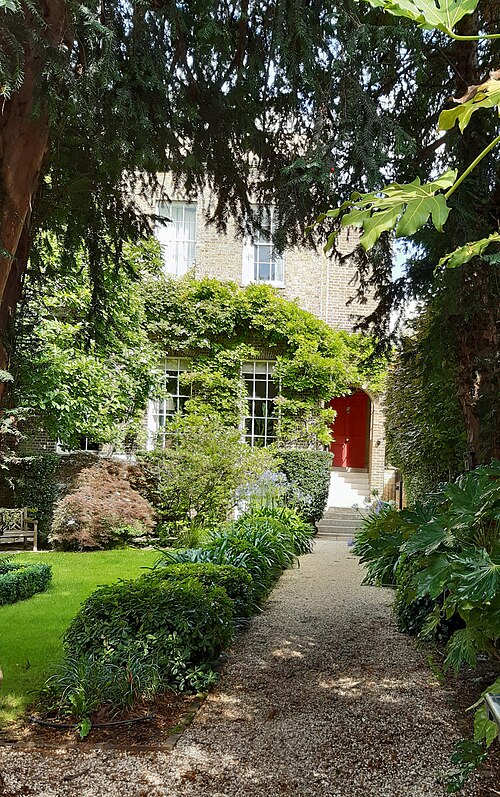
Melbourne House, South Parade was one of the few other existing houses on the estate.

The Church, Tabard Inn and Stores from Acton Green by Edward Hargitt, 1882